CATEGORIES

You Have a Voice. What’s Your Story?

Real stories, honest thoughts and dreams taking shape. Our young people are finding their voice through writing, sharing who they are and exploring who they could become. Some write in their own name. Others write anonymously. Every voice matters, including yours.

You don’t need to be a writer or have all the answers. Share your experiences, your challenges or the future you dream of, and we’ll help you put your story into words. Share Your Story

BLOG & NEWS

I’m More graphic showing a woman at a job interview, with the text “Job Applications & Interviews” and “Overcoming barriers. Building confidence.”

When Applications and Interviews Become Barriers to Employment

Applying for a job can feel like an opportunity to move forward. But when applications go unanswered or interviews do not lead to an offer, the process can become discouraging. For someone who is already feeling unsure about their future, each setback can make it harder to believe that an employer will give them a chance.

Understanding Job Application and Interview Barriers

There are many factors that can affect how someone gets through an application or interview. Experience, qualifications, preparation and confidence can all play a part. However, access to technology, travel costs, health needs and the way employers recruit can create difficulties too. Understanding these challenges can help us avoid assuming that someone is unemployed because they are not trying.

Recognising Your Strengths When Applying for Jobs

One of the first barriers can be knowing how to write an application. Describing your strengths is not always easy, especially when you have little paid work experience. You might look at a blank application form and feel that you have nothing worth including. Yet helping at home, completing college projects, volunteering or taking part in a team can provide useful examples of responsibility, communication and problem-solving. You can also use the National Careers Service skills assessment to explore your strengths and identify abilities that may support your job search.

Job descriptions can also feel overwhelming. A long list of requirements may make someone rule themselves out before applying. It helps to read the description carefully and separate essential requirements from those described as desirable. You may have relevant experience from a different setting, even if you have never held the same job title.

A CV that is difficult to follow or an application that does not explain how someone meets the role’s requirements can make it harder for an employer to understand their suitability. This is why checking spelling, using a clear layout and giving relevant examples can be useful. These are skills people can learn with guidance; struggling with an application does not mean they would struggle to do the job. For further advice, the National Careers Service CV guidance explains how to organise your CV and present relevant skills and experience.

How Online Applications Can Create Employment Barriers

Online applications bring their own challenges. Not everyone has a reliable internet connection, a suitable device or a quiet place to complete forms. Some recruitment processes involve several websites, assessments and document uploads. For someone who is less confident using technology, the process can become a barrier before they have spoken to anyone. You can explore I’M MORE’s employment and training resources for additional guidance on developing skills and preparing for employment.

Building Confidence Before a Job Interview

Being invited to an interview can bring excitement and worry at the same time. You may know you could do the work but find it difficult to explain your abilities under pressure. Worrying about giving the wrong answer, forgetting your examples or being judged can make it harder to speak clearly. An interview shows how someone responds in that particular situation, but it cannot reveal every quality they would bring to a workplace.

Preparation can make the experience feel more manageable. Reading about the employer, reviewing the job description and preparing a few examples can give you something to draw on. Think about a time you helped someone, solved a problem, learned something or handled a responsibility. Practising your answers aloud can help you explain those experiences in your own words. The National Careers Service interview advice provides practical tips on preparing for interviews and answering common questions.

During an interview, it is reasonable to take a moment to think before answering. You can also ask the interviewer to repeat or explain a question. You do not have to give a perfect speech. The aim is to help the employer understand your experience, your interest in the role and how you approach situations.

Practical Challenges and Workplace Accessibility

Practical circumstances matter too. Travel expenses, caring responsibilities and a lack of suitable interview clothing can add pressure. Health conditions or disabilities may also affect how someone takes part. Employers can help by explaining the interview process clearly, discussing access needs and giving candidates a fair opportunity to demonstrate their abilities.

Dealing With Job Rejection and Building Resilience

One of the most difficult parts is waiting afterwards. When there is no reply or useful feedback, someone may be left wondering what went wrong. It can be tempting to blame yourself, even when you do not know how the decision was made. Another candidate may have had more relevant experience, or the employer’s needs may have changed.

If you are unsuccessful, you can ask politely for feedback and consider whether there is something useful to practise. You do not need to treat every rejection as proof that you must change everything about yourself. Sometimes there is a lesson to take forward; sometimes you simply do not have enough information to know why you were not chosen. For more guidance on developing confidence and recognising your potential, explore The Voice from I’M MORE.

Your Employment Journey Does Not Define Your Worth

Applications and interviews are important stages in finding employment, but they can be challenging for many reasons. People need clear information, practical support and opportunities to show what they can do. If you are finding the process difficult, that does not mean you have nothing to offer. Your confidence can grow with practice and encouragement, and an unsuccessful application does not decide your worth or your future. You can also explore I’M MORE’s on-demand training and learn more about the support available through I’M M ORE.
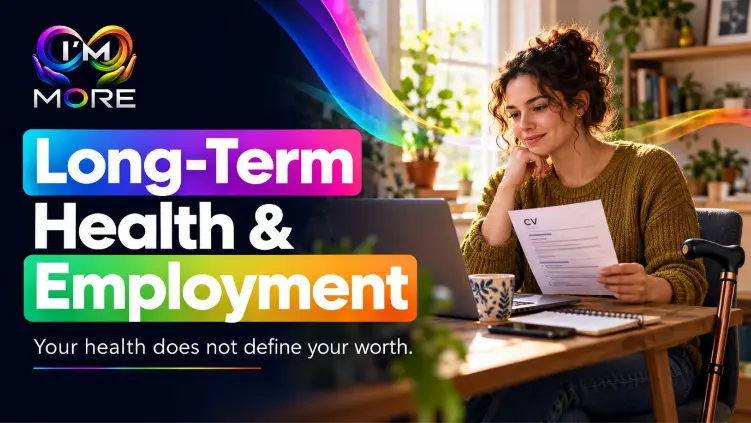

I’m More graphic showing a woman reviewing her CV beside a laptop and walking aid, with the headline “Long-Term Health & Employment”.

How Long-Term Health Issues Can Affect Employment and Confidence

Wanting to work but struggling with your health can be frustrating. You may have ambitions, skills and ideas about your future, yet finding a job that suits your needs can feel difficult. When your health affects what you can do each day, searching for work can bring extra challenges that other people may not see or understand. 

Long-Term Health Issues and Employment Challenges

Long-term health issues and employment challenges can make finding suitable work difficult. Wanting to work but struggling with your health can be frustrating. You may have ambitions, skills and ideas about your future, yet finding a job that suits your needs can feel difficult. When your health affects what you can do each day, searching for work can bring extra challenges that other people may not see or understand. Understanding the relationship between long-term health issues and employment can help people recognise the challenges they face when searching for suitable work.

Searching for a job already takes energy. Writing applications, preparing for interviews and travelling to meet employers can feel demanding when you are also managing your health. Someone might need regular breaks, flexible hours or time for medical appointments. Finding a role that accommodates these needs can take time, even when the person is qualified and motivated. 

There can also be worry about how an employer will respond. Someone may feel unsure about explaining their condition or asking for support. They might fear being judged before having the chance to show their abilities. Conditions that are not immediately visible can bring another difficulty: feeling that you have to explain or prove why something is challenging. Open conversations about long-term health issues and employment can help employers better understand individual needs and provide appropriate support.

Over time, these experiences can affect confidence. When applications lead nowhere, someone may begin to question their value. They might wonder whether an employer will ever see beyond their health condition and recognise what they could contribute. Repeated disappointment can make the next application feel harder to start. 

Watching friends or family progress in their careers can bring mixed emotions too. You can feel happy for someone else while feeling sad about your own circumstances. Seeing others earn money, build independence or talk about their working lives may leave you feeling left behind. However, comparing yourself with someone whose circumstances are different can put unfair pressure on you. 

Being unable to work, or needing to work fewer hours, can also affect someone’s sense of identity. People often ask what you do for a living, as though employment explains who you are. When you do not have a job, answering that question can feel uncomfortable. Yet a job title cannot describe your kindness, creativity, knowledge or the relationships you build. 

Recognising your abilities can be a starting point for rebuilding confidence. Your strengths might include listening, organising, solving problems or supporting others. These qualities still matter, even if your health currently limits how you use them. You do not need to turn every difficult experience into an achievement to deserve respect. 

For people who can work, suitable support can make a difference. Depending on the person and the role, this might include flexible hours, changes to tasks, accessible equipment or opportunities to work from home. Understanding what helps you manage your condition can make it easier to identify roles that may suit you. A suitable job should take account of both your abilities and your health needs. 

It is equally important to recognise that employment may not currently be possible for everyone. Some people need to focus on treatment, recovery or managing everyday life. That does not make them lazy or mean they have given up. Looking after your health can take considerable effort, even when that effort is invisible to others. 

If you are facing these difficulties, you deserve to be heard and supported. Talking to someone you trust or seeking employment advice that takes your health into account may help you explore your options at your own pace. You do not have to have every answer straight away. 

Living with a long-term health condition can change your route into employment, but it does not remove your potential or your worth. Whether you are looking for suitable work, working fewer hours or currently unable to work, you deserve understanding. Your contribution to the world is bigger than your employment status. 

Living with a long-term health condition can make finding work more challenging, and those difficulties can affect your confidence. Your health needs deserve understanding, and your skills and ambitions deserve recognition. For some people, the right support can make employment possible; for others, looking after their health must come first. Wherever you are in your journey, you deserve respect and encouragement. Your worth is not measured by whether you have a job, how many hours you work or how quickly you move forward.


Additional Resources

I'M MORE THE VOICE – Where You Live Shouldn’t Decide Your Chances of Finding Work, highlighting differences in youth employment opportunities across England.

Where You Live Shouldn’t Decide Your Chances of Finding Work

Where a young person grows up can have a significant relationship with their chances of moving successfully from education into employment, with new analysis highlighting major differences in NEET rates across different parts of England.

Recent data has drawn attention to areas where particularly high proportions of young people are not in education, employment or training. The government’s independent Young People and Work review found that eight of the ten English local authorities with the highest likelihood of young people being NEET are located in the North of England and the Midlands.

Blackpool stands out particularly strongly. The review reports that almost a quarter of young people in the area are NEET, compared with fewer than one in ten in Bath. Separate research from the Social Mobility Commission also shows that Blackpool continues to experience several overlapping factors associated with becoming NEET, including lower educational attainment, high levels of free school meal eligibility and comparatively high levels of special educational needs.

Other major cities face their own challenges. In Birmingham and Bradford, more than 8% of 16-to-24-year-olds are receiving Universal Credit and looking for work, according to the Young People and Work review. That is more than double the national average of 4.1%.

But these figures should not be interpreted as meaning that young people in certain towns or cities have less ambition. Instead, they demonstrate how local labour markets, education, transport, qualifications, deprivation and access to employers can combine to create very different experiences depending on where somebody lives.

Research from youth employment charity Impetus has consistently shown that even areas located close together can experience very different outcomes. Its analysis of the West Midlands, for example, recorded a 17% NEET rate among young people in Birmingham in the dataset examined, alongside significant differences connected with disadvantage and qualification levels.

London demonstrates the same complexity. Looking only at the capital’s overall employment picture can hide considerable differences between individual boroughs. Impetus research has found substantial variation in NEET outcomes across London, reinforcing the importance of examining communities at a more local level rather than assuming that an entire city experiences the same challenges.

This matters because opportunity is often local.

A young person may be willing to work but still struggle if suitable entry-level employers are difficult to reach. Someone may want an apprenticeship but find limited opportunities within their chosen industry nearby. Others may have qualifications but lack workplace experience, professional connections or access to the careers support that could help them take their next step.

Local employer partnerships can help close some of those gaps. Businesses working alongside schools, colleges, training providers and employability organisations can introduce young people to industries that exist within their own communities and create clearer pathways from education into employment.

Apprenticeships and genuine entry-level positions are particularly important because they give somebody somewhere to begin. Young people cannot build years of experience before somebody gives them their first opportunity.

Qualifications also remain an important part of the picture. Impetus’ wider Youth Jobs Gap research has found that young people from disadvantaged backgrounds are twice as likely as their better-off peers to become NEET, while stronger qualifications are associated with a substantially lower risk of becoming disconnected from education or employment.

However, education alone cannot solve every barrier. Previous Impetus research concluded that improving educational outcomes is necessary but not sufficient to eliminate differences in employment outcomes, highlighting the additional importance of local employability services and careers advice.

That is why understanding local data can be so valuable. If one community has particularly high NEET rates, organisations can look more closely at what young people there actually need — whether that means more employer engagement, apprenticeships, transport options, confidence building, careers guidance, practical training or earlier intervention.

At I’M MORE, we believe every young person deserves the opportunity to build a future defined by potential rather than circumstance.

Where somebody lives will always shape the opportunities immediately around them, but it should not determine what they are capable of achieving. Strong local networks between employers, education providers, apprenticeships and community organisations can help make opportunity more visible and accessible.

Our mission is to help young people Discover, Believe and Become.

NEET hotspots tell us where challenges are concentrated, but they should also help identify where action can make the greatest difference. The goal should be to ensure that whether a young person grows up in Blackpool, Birmingham, London or anywhere else, they have a realistic route towards skills, confidence, employment and a future they can build on.

I'M MORE THE VOICE – NEET Numbers Fall Below One Million – But Too Many Young People Still Need Opportunity, with 981,000 remaining outside education, employment or training.

NEET Numbers Fall Below One Million – But Too Many Young People Still Need Opportunity

The number of young people outside education, employment or training has fallen back below one million, but the latest figures show that the scale of the challenge remains significant.

According to the Office for National Statistics, an estimated 981,000 people aged 16 to 24 were NEET between April and June 2026, equivalent to 13% of young people in this age group. The total fell by around 30,000 compared with the previous quarter, although it remained approximately 30,000 higher than during the same period in 2025.

The quarterly reduction is a welcome movement after the total exceeded one million during the first three months of 2026. However, the ONS advises caution when interpreting short-term changes in NEET estimates because smaller population groups can experience greater statistical volatility. Looking at the longer-term picture remains important.

Behind the headline figure are hundreds of thousands of young people experiencing very different circumstances. Some are actively searching for their first job. Others may need additional education or training, while some have become more disconnected from the labour market and require personalised support before employment becomes a realistic next step.

This distinction matters because reducing NEET levels cannot simply be about moving a national number down. It needs to be about understanding why individual young people are outside employment or education and creating routes that help them progress.

Why the Wider NEET Picture Matters

The independent Young People and Work review has highlighted the scale of this wider challenge. It found that almost 60% of young people who are NEET are economically inactive rather than unemployed, meaning they are not currently looking for work.

It also reported that six in ten NEET young people have never had a job, compared with four in ten in 2005.

These figures demonstrate why the challenge cannot be solved through vacancies alone. For some young people, the journey towards employment needs to begin with rebuilding confidence, identifying strengths, developing practical skills and understanding what opportunities are available.

Early Intervention Can Make a Difference

The longer somebody remains disconnected from education, employment or training, the harder returning can become.

Analysis within the review found that 65% of those who had been NEET for less than a year returned to employment, education or training the following year. Among those who had been NEET for more than a year, that proportion fell to 25%.

That makes early intervention particularly important.

Helping somebody develop confidence, workplace experience and employability skills before a short period outside work turns into long-term disengagement can potentially change the direction of their future.

Early support can also help young people understand their strengths, explore possible career paths and gain practical experience before they become increasingly disconnected from the labour market.

Young People Still Have Ambition

Being NEET does not mean lacking ambition.

A DWP-commissioned survey of 417 NEET 16 to 24-year-olds explored their aspirations, barriers and the support they believed could help them move towards employment, education or training.

Young people may want to work while still facing significant obstacles. Limited experience, low confidence, uncertainty about career options, skills gaps and a lack of access to appropriate opportunities can all make entering the workplace more difficult.

Creating opportunities therefore means ensuring there are realistic places for young people to move towards.

Apprenticeships, practical training, work experience and genuine entry-level jobs can provide the first step into a career while allowing employers to develop the skills they need within their future workforce.

Employers Have an Important Role

Employer partnerships are especially important.

A young person can complete training, improve their CV and practise interviews, but ultimately somebody needs to provide the opportunity to put those skills into practice.

Employers willing to recruit for potential as well as previous experience can help break the familiar cycle of needing experience to get a job but needing a job to gain experience.

Providing meaningful entry-level opportunities can benefit employers too. Businesses can develop emerging talent, introduce young people to their industries and build a stronger pipeline of future employees with the skills their organisations need.

Work experience, apprenticeships, mentoring and entry-level employment can all create important bridges between preparation and long-term employment.

Reaching Young People Outside Traditional Employment Support

There is also a substantial group of young people who may not be reached through traditional employment services.

The Young People and Work review estimates that around 314,000 NEET 18 to 24-year-olds in England were not claiming benefits, meaning they can sit outside the main routes through which employment support is delivered.

This reinforces the importance of community organisations, education providers, employers and local partnerships working alongside national programmes.

Support needs to be visible and accessible to young people whether or not they are already connected to the benefits system.

For some young people, a local organisation, training provider, employer or community programme may provide the first meaningful connection back towards education, skills development or employment.

The People Behind the Statistics

At I’M MORE, we believe every young person deserves the opportunity to build a future defined by potential rather than circumstance.

Falling below one million is progress, but 981,000 is still more than a statistic.

It represents individual young people with different skills, interests, ambitions and barriers.

The aim should not simply be to reduce the NEET total. It should be to make sure that the people behind that number can see and access a realistic route forward.

This means creating environments where young people can discover their strengths, develop confidence and gain the practical skills and experiences that can help them progress.

Our mission is to help young people Discover, Believe and Become.

Turning Progress Into Long-Term Change

Sustained progress will require education providers, employers, apprenticeships, employability support organisations, communities and national programmes to work together.

Training is most effective when there are genuine opportunities waiting at the next stage. Employers benefit when young people are better prepared for the workplace, while young people benefit when businesses are prepared to recognise potential rather than focusing exclusively on previous experience.

The challenge is therefore not simply getting NEET numbers below one million.

It is creating a system in which fewer young people become disconnected in the first place and those who do can quickly find a realistic pathway back into education, training or employment.

If more young people can access their first opportunity before temporary disengagement becomes long-term, falling NEET numbers can become more than a quarterly change.

They can represent futures beginning to move forward.

Young person building confidence before their first job interview.

How to Build Confidence Before Your First Job Interview

Your first job interview can feel like a big moment. You may be excited that an employer wants to meet you, but at the same time, you might be worried about what they will ask, what you should say or whether you have enough experience.

If you feel nervous, that does not mean you are unprepared or unsuitable for the job. Interviews are unfamiliar situations for many young people, especially when you are applying for your first role.

The good news is that job interview confidence can be built.

You do not need to walk into an interview feeling completely fearless. You need to understand the opportunity, prepare useful examples and give yourself the best chance to communicate who you are and what you could bring to the role.

At I’M MORE, we believe progress starts by recognising your strengths, believing that you can move forward and taking practical action.

Here are some practical ways to build confidence before your first job interview.

1. Remember Why You Have Been Invited

One of the easiest ways to lose confidence before an interview is to assume everyone else applying for the job is more qualified than you.

But remember something important:

The employer chose to interview you.

They have already seen something in your CV, application or conversation that made them interested enough to learn more about you.

An interview is not simply a test designed to catch you out. It is a conversation that helps an employer understand whether you could be a good fit for the role.

The UK government’s National Careers Service explains that employers may not expect candidates to have done the exact job before. They can instead look for relevant strengths, experience, education and interests.

So instead of thinking:

“I need to prove that I know everything.”

Try thinking:

“I have earned the opportunity to have this conversation. Now I need to show them what I can offer.”

That small change in perspective can make the interview feel much more manageable.

2. Research the Company Before Your Interview

Preparation is one of the best ways to increase confidence.

Before your interview, spend some time learning about the employer.

Look at:

  • what the company does
  • the products or services it provides
  • who its customers are
  • its values and culture
  • the job description
  • the skills mentioned in the vacancy
  • recent company news, if relevant

You do not need to memorise the entire company website.

Instead, aim to understand enough to explain why you want to work there.

For example, an interviewer might ask:

“Why do you want to work for us?”

A stronger answer connects your interests to something specific about the company.

Instead of:

“I just need a job.”

You might explain that you are interested in the industry, like the company’s approach to customer service or believe the position would give you an opportunity to develop particular skills.

The National Careers Service interview guidance also recommends researching the company, carefully reading the job description and reviewing your CV or application before an interview.

The more you know about the opportunity, the less unknown the interview feels.

3. Read the Job Description Again

Do not forget about the job description once you have submitted your application.

Read it again before your interview.

Look for words such as:

  • communication
  • teamwork
  • organisation
  • reliability
  • customer service
  • problem-solving
  • initiative
  • flexibility
  • attention to detail
  • willingness to learn

These are clues about what the interviewer may want to discuss.

Then ask yourself:

“When have I demonstrated this?”

You might not have previous employment experience, but that does not mean you have no relevant experience.

Examples can come from:

  • school or college
  • volunteering
  • sports
  • caring responsibilities
  • hobbies
  • community activities
  • personal projects
  • training
  • work experience
  • helping family members
  • clubs or groups

If you are still looking for your first opportunity, explore I’M MORE’s guide to jobs, apprenticeships and employment support for 18–24-year-olds in Essex.

Your experiences may be more relevant than you initially realise.

4. Prepare Answers to Common Interview Questions

You cannot predict every question, but you can prepare for common ones.

You may be asked:

Tell me about yourself.

Why do you want this job?

Why do you want to work here?

What are your strengths?

What is one area you would like to improve?

Tell me about a time you worked as part of a team.

Tell me about a problem you solved.

Why should we hire you?

Do not try to memorise a perfect script word for word.

That can actually make you more nervous if you forget one sentence.

Instead, prepare the main points you want to communicate.

The National Careers Service provides additional guidance on common interview questions and how to approach them.

5. Use the STAR Method

When an interviewer asks you to describe something you have done, you can use the STAR method to organise your answer.

STAR means:

Situation – What was happening?

Task – What did you need to achieve?

Action – What did you personally do?

Result – What happened as a result?

Imagine an employer asks:

“Tell me about a time you worked well in a team.”

You could use an example from a college project.

Explain what the project was, what the team needed to achieve, what responsibility you took and what the final result was.

The official National Careers Service STAR method guide explains how this framework can be used to demonstrate your skills and experience during interviews.

Preparing three or four STAR examples before your interview can give you useful material for several different questions.

6. Practise Out Loud

Thinking about an answer and actually saying it are very different things.

Practise speaking your answers aloud.

You could ask:

  • a friend
  • parent
  • sibling
  • teacher
  • mentor
  • careers adviser

to conduct a short mock interview with you.

If nobody is available, record yourself answering questions on your phone.

Listen back.

Are you speaking too quickly?

Are your answers clear?

Are you giving examples?

Are you getting to the point?

Practising does not mean creating robotic answers. It helps you become comfortable talking about yourself.

The first attempt may feel awkward.

The fifth will probably feel much easier.

That is confidence developing through repetition.

7. Stop Telling Yourself You Have “No Experience”

Young people often enter their first interview believing they have nothing to talk about because they have never had a formal job.

But employers can look at much more than previous employment.

Perhaps you helped organise a school event.

Maybe you regularly help care for a family member.

Perhaps you play football and understand teamwork.

Maybe you taught yourself video editing, coding, design or another skill.

Perhaps you completed a college project with a deadline.

All of these experiences can demonstrate qualities employers value.

If lack of experience is making your job search difficult, read I’M MORE’s guide on how to get a job with no experience.

Your first employer is not expecting you to have ten years of professional experience.

They are looking for potential as well as experience.

8. Prepare Questions to Ask the Employer

An interview works both ways.

You are also deciding whether the opportunity is right for you.

Prepare two or three questions.

For example:

“What would a typical day in this role look like?”

“What training would I receive when I start?”

“What qualities make someone successful in this role?”

“What opportunities are there to learn and develop?”

Asking thoughtful questions can demonstrate genuine interest and can also help you feel more involved in the conversation.

9. Prepare Everything the Night Before

Avoid creating unnecessary stress on the morning of your interview.

Prepare:

  • your clothes
  • your CV
  • relevant documents
  • interview address
  • travel route
  • employer’s contact details
  • notebook and pen
  • questions you want to ask

If it is a video interview, test:

  • your internet connection
  • microphone
  • camera
  • meeting software
  • lighting
  • background

For online interviews, the National Careers Service video interview guidance recommends testing your equipment, finding a quiet location and preparing your interview environment beforehand.

Removing small uncertainties allows you to focus on the conversation itself.

10. Give Yourself Plenty of Time

Rushing creates stress.

If the interview is in person, plan your journey and aim to arrive in the area early.

If it is online, log in early enough to check your technology.

Give yourself time to settle.

Before the interview starts, slow down your breathing and remind yourself of the examples you prepared.

You do not need to become a different person when the interview begins.

You simply need to communicate clearly.

11. Do Not Panic If You Need Time to Answer

You do not have to answer every question immediately.

It is perfectly reasonable to take a moment to think.

You can also ask the interviewer to repeat or clarify a question if you are unsure what they mean.

A short pause can help you organise your thoughts and give a better answer.

Confidence is not about answering as quickly as possible.

It is about staying composed enough to think.

12. Remember That One Interview Does Not Define You

You may not get your first job after your first interview.

That can be disappointing, but it does not mean you are incapable of succeeding.

Every interview gives you experience.

Afterwards, ask yourself:

What went well?

Which question was difficult?

What would I answer differently next time?

What can I practise before my next interview?

If appropriate, you can also ask the employer for feedback.

Each interview makes the next one less unfamiliar.

Confidence often comes from doing something repeatedly rather than waiting until you magically feel ready.

Need Extra Support With Your Next Step?

Finding work can sometimes feel overwhelming, particularly if you are unsure which direction to take or have been outside employment, education or training.

You do not have to figure out every step at once.

I’M MORE exists to help young people recognise their strengths, build confidence and take practical steps towards employment and opportunity.

Through Discover. Believe. Become., the focus is not only on getting a job. It is about understanding where you are now, recognising what you can offer and developing the confidence to move forward.

Explore I’M MORE employment and training resources or discover employment opportunities and support for 18–24-year-olds in Essex to start planning your next step.

Final Thoughts

Your first job interview does not require you to be perfect.

You do not need to know every answer.

And you do not need years of experience to have something valuable to offer.

Preparation creates familiarity. Familiarity builds confidence. Confidence helps you communicate your potential.

Research the employer. Understand the role. Prepare examples. Practise your answers. Ask questions. And remember why you are there in the first place:

Someone saw potential in your application and wants to know more about you.

Your job is to give them that opportunity.

Discover your strengths. Believe in what you can become. Then take the next step.

I'M MORE THE VOICE – Hidden NEETs Highlight Why Employment Support Must Reach Beyond the Benefits System, helping more young people access routes into work, skills and training.

Hidden NEETs Highlight Why Employment Support Must Reach Beyond the Benefits System

Thousands of young people across the UK are outside education, employment or training without claiming benefits, raising an important question about how employment support reaches those who may not be connected to the traditional systems designed to help people into work.

New research from the Institute for Fiscal Studies (IFS) examines this group, often described as hidden NEETs. At the end of 2025, around 870,000 people aged 18 to 24 in Great Britain were not in education, employment or training, with almost 300,000 estimated to be claiming no benefits at all. This means they are outside the main benefit-based routes through which young people can access employment support.

However, being outside the benefits system does not necessarily mean somebody is disconnected from the labour market. The IFS found that among hidden NEETs aged 22 to 23, 74% were actively looking for work, while others were volunteering or temporarily between education and employment. More than half had been NEET for less than six months.

This is an important distinction. Many young people outside employment are not necessarily lacking motivation or ambition. They may be applying for jobs, waiting for an opportunity or trying to make the transition from education into the workplace without receiving formal employment support.

The research also found that hidden NEETs generally have stronger employment prospects than young people who are NEET and receiving benefits. Among the 22 to 23-year-olds studied, 54% of hidden NEETs had a degree, compared with 12% of those receiving benefits. The IFS therefore cautions against assuming that every young person outside the benefits system requires intensive government intervention.

At the same time, there is a group for whom being outside the system could become a much longer-term problem. Around 43% of hidden NEETs aged 22 to 23 had been outside work or education for more than six months, while 19% had been in that position for more than 18 months.

This is where access to opportunity becomes particularly important.

Some employment initiatives are connected to how long somebody has been claiming Universal Credit rather than simply how long they have been outside work. The IFS argues there is a case for considering wider access to employment programmes for young adults who are not claiming benefits, while also acknowledging the additional costs and practical challenges this could create.

The wider independent review into young people and work has also highlighted the difficulty of identifying young people who are outside both employment and the welfare system. Government analysis estimated around 314,000 18 to 24-year-olds in England were NEET without claiming benefits, although the estimate has a wide uncertainty range. Looking for work or a suitable course was the most commonly identified reason for being NEET among this group.

Employment support therefore cannot depend entirely on young people finding their way into one particular system.

Community organisations, colleges, training providers, local employers and youth services can all provide additional routes through which somebody can discover opportunities. Stronger connections between these organisations could help ensure that a young person does not have to be claiming a particular benefit before they can receive careers advice, develop workplace skills or meet employers.

Employers can play an especially important role. Apprenticeships, work placements and genuine entry-level positions give young people somewhere to begin building experience. Recruiting for potential alongside previous employment history can also prevent capable candidates from being overlooked simply because they have not yet had their first substantial opportunity.

There also needs to be recognition that the term “hidden NEET” covers people in very different circumstances. Someone who has recently finished university and is spending several months looking for their first graduate job may require very different support from somebody who has spent two years disconnected from both employment and education.

That is why personalised support matters. Rather than treating every young person outside employment as having the same needs, support can focus on the individual barriers preventing progress — whether that is experience, confidence, qualifications, transport, career direction or simply access to suitable vacancies.

At I’M MORE, we believe every young person deserves the opportunity to build a future defined by potential rather than circumstance.

Young people should not have to become visible to the benefits system before they become visible to opportunity. Employment support can be strongest when employers, education, apprenticeships, employability programmes and community organisations create multiple ways for people to engage and move forward.

Our mission is to help young people Discover, Believe and Become.

The challenge is not simply finding every young person who is currently NEET. It is making sure that when somebody needs support, there is an accessible route towards skills, confidence, employers and meaningful work — regardless of whether they are already connected to the welfare system.

I'M MORE THE VOICE – Falling NEET Numbers Are Encouraging – But More Young People Still Need a Route Into Work through employment, education and skills opportunities.

Falling NEET Numbers Are Encouraging – But More Young People Still Need a Route Into Work

The latest figures showing a fall in the number of young people not in education, employment or training offer some encouragement, but the wider picture shows there is still significant work to do to connect more young people with opportunity.

The latest data released in August 2026 shows an estimated 981,000 young people aged 16 to 24 were NEET between April and June, equivalent to around 13% of the age group. The total has fallen compared with the previous quarter, taking the number back below one million, but remains higher than a year earlier.

Learning and Work Institute Deputy Director Elizabeth Gerard described the fall as welcome but warned that the number remains too high. The organisation also highlighted a particularly important change within the figures: more young people classified as NEET are unemployed and actively looking for work, rather than economically inactive.

That distinction matters because it shows that many young people are not disconnected from the idea of employment. They want to work. The challenge is ensuring that enough suitable opportunities exist and that young people can successfully connect with them.

For somebody beginning their career, finding that first opportunity can be one of the hardest stages. Employers understandably value experience, but young people cannot build workplace experience until somebody gives them the opportunity to start.

Apprenticeships, work placements, practical training and genuine entry-level positions can help bridge that gap.

The wider jobs market can make that transition even more difficult. Learning and Work Institute’s August labour-market analysis found that vacancies have continued to fall, while retail and hospitality, two sectors that have traditionally provided many young people with their first experience of employment, have experienced notable reductions in employment.

This makes employer partnerships increasingly important. Education providers, employment programmes and community organisations can help young people develop skills and confidence, but employers ultimately provide the workplaces where those abilities can turn into experience and careers.

Businesses willing to recruit for potential as well as previous experience can provide opportunities to candidates who might otherwise be overlooked. With training, mentoring and a supportive introduction to the workplace, a young person without an extensive employment history can develop into a valuable member of the workforce.

Apprenticeships can provide another important route by combining learning with practical employment. For young people who may not want to follow a purely academic pathway, vocational education and employer-led training can offer the chance to develop skills while gaining real experience.

Confidence also deserves attention. Spending months outside education or employment can make moving forward feel increasingly difficult, particularly when applications repeatedly end in rejection or receive no response.

Employability support should therefore help young people with communication, interviews, workplace expectations and recognising the transferable skills they already possess.

There is also no single reason why somebody becomes NEET. Previous Learning and Work Institute research found that 58% of NEET young people had never had a paid job, while almost half remained outside education, employment or training a year after first becoming NEET.

These figures reinforce why early support and access to first employment opportunities can be so important.

The latest fall in the headline number is therefore something to build upon. Sustainable progress will require young people to have clear routes between education, skills development, apprenticeships, employability support and employers rather than leaving them to navigate the transition alone.

At I’M MORE, we believe every young person deserves the opportunity to build a future defined by potential rather than circumstance.

Supporting someone into work is not simply about changing their employment status. A first opportunity can build confidence, create independence, develop skills and introduce somebody to career possibilities they may never previously have considered.

The goal should be to ensure that fewer young people spend long periods waiting on the outside of employment and education. That requires employers, training providers, education organisations and communities to work together to create opportunities that young people can genuinely access.

Our mission is to help young people Discover, Believe and Become.

Falling NEET numbers are encouraging, but progress should ultimately be measured by how many young people are able to move towards a future with greater confidence, skills and opportunity.

I'M MORE THE VOICE – Lifelong Learning Could Help More Young People Build Skills for the Future through continued education, training and employment opportunities.

Lifelong Learning Could Help More Young People Build Skills for the Future

Learning should not stop when somebody leaves school, college or university. As workplaces change and new technologies reshape the skills employers need, the ability to continue learning throughout a career is becoming increasingly important.

Tackling the jobs crisis facing young people should form part of a much wider rethink of lifelong learning. The organisation believes skills development needs to respond not only to the immediate difficulties young people face entering employment, but also to the changing needs of workers and businesses throughout their working lives.

The timing is significant. The BCC’s latest economic forecast expects youth unemployment to reach 16.6% by the end of 2026 before potentially rising to 17.6% in 2027. At the same time, businesses are facing their own pressures around investment and recruitment, making it even more important that the skills people develop connect with genuine opportunities in the labour market.

For young people beginning their careers, lifelong learning can start with something as simple as recognising that their first qualification or first job does not have to determine everything that comes afterwards. Skills can be developed, careers can change and new opportunities can emerge as somebody gains experience.

This is particularly important for young people who may currently be outside education, employment or training. Someone who has struggled to find their first job does not necessarily lack ability. They may need a different route into the workplace, additional training, greater confidence or an opportunity to demonstrate what they can do.

Apprenticeships can play an important role by combining employment with learning. Practical training, work placements and employer-led programmes can also help young people develop skills in real working environments while building the experience that can be difficult to gain through traditional education alone.

But learning should also reflect how quickly workplaces are changing. Digital technology and artificial intelligence are transforming many industries, while communication, adaptability, teamwork and problem-solving remain valuable across different sectors. Preparing people for the future therefore means developing both technical abilities and the transferable skills that allow someone to adapt as their career progresses.

Employers have an important part to play in making this possible. Businesses understand the skills they require and can help education and training providers ensure learning connects with real jobs. Stronger employer partners can also give young people greater exposure to different industries, allowing them to understand what careers actually involve before deciding which direction they want to pursue.

The relationship can benefit employers too. The BCC has previously highlighted concerns around recruitment and skills, including the need to engage Generation Z more effectively with the workplace. Creating clearer links between businesses, training and young people can help employers develop their future workforce rather than waiting for perfectly experienced candidates to appear.

Lifelong learning also recognises that careers are rarely completely predictable. Industries grow and change, new roles appear and the skills required for existing jobs evolve. Giving people access to training throughout their working lives can help them respond to those changes rather than feeling left behind by them.

For young people, that message can be particularly powerful. Entering employment does not mean having to know exactly what you want to do for the next 40 years. The first opportunity can simply be a starting point — somewhere to build confidence, develop skills, discover strengths and understand what direction might come next.

That is why careers support should focus on possibility as well as immediate employment. Helping somebody secure a job matters, but helping them understand how they can continue developing after they enter work can create much longer-term benefits.

At I’M MORE, we believe every young person deserves the opportunity to build a future defined by potential rather than circumstance.

Creating those futures requires education, employers, training providers and community organisations to work together. Apprenticeships, practical skills development, employability support and accessible career pathways can all provide different routes towards the same goal: helping people move forward.

Lifelong learning ultimately means recognising that development does not have an expiry date. Whether somebody is taking their first steps towards employment, learning a new workplace skill or changing direction later in their career, there should always be an opportunity to grow.

Our mission is to help young people Discover, Believe and Become.

If more young people can access learning that connects directly with employers and real career opportunities, tackling youth unemployment becomes about more than getting somebody into their first job. It becomes about giving them the skills, confidence and adaptability to continue building their future long after that first opportunity arrives.

I'M MORE THE VOICE – Nearly One Million Young People Remain Outside Work or Education – Creating Opportunity Must Remain a Priority.

Nearly One Million Young People Remain Outside Work or Education Creating Opportunity Must Remain a Priority

Nearly one million young people across the UK remain outside education, employment or training, reinforcing the scale of the challenge facing those trying to take their first steps towards a career.

The latest Office for National Statistics figures estimate that 981,000 people aged 16 to 24 were not in education, employment or training (NEET) between April and June 2026. This represents 13% of all young people within that age group. While the number fell by 30,000 compared with the previous quarter, it remained 30,000 higher than during the same period in 2025.

The figures have prompted renewed concern about the opportunities available to young people, with the situation described as a serious national challenge. But behind a number approaching one million are hundreds of thousands of individual circumstances, ambitions and abilities. Addressing the issue requires more than focusing on the headline figure alone.

A significant proportion of young people classified as NEET are actively looking for employment. The ONS estimates that 393,000 were unemployed, meaning they were seeking work and available to start. Another 588,000 were economically inactive.

This distinction matters because many young people outside employment have not given up on the idea of working. For some, the challenge is finding an accessible route into it.

The transition into employment can be particularly difficult when somebody has limited workplace experience. Young people can find themselves applying for entry-level positions while competing against applicants who already have employment histories, creating a familiar problem: they need experience to secure a job but need somebody to give them a job before they can gain experience.

Creating more genuine entry points into the workforce can help break that cycle. Apprenticeships, work placements, vocational training and entry-level positions can give young people an opportunity to demonstrate their ability while developing practical skills in a working environment.

Employers can also make a difference by recognising potential alongside previous experience. Qualifications and employment history provide useful information, but they cannot always demonstrate somebody’s attitude, creativity, communication skills or willingness to learn. Recruitment that gives young people an opportunity to show those qualities can open doors for candidates who might otherwise be overlooked.

Confidence is another important part of the transition into employment. Spending months applying for jobs without success can gradually affect how somebody views their own abilities. Employability support that combines practical skills with interview preparation, communication, mentoring and confidence building can help young people become better prepared for opportunities when they arrive.

Education and training remain equally important. The ONS considers apprenticeships, government-supported training programmes, qualification-based learning and recent job-related training as forms of education or training within its NEET measures. Strengthening these pathways can give young people alternatives when a traditional academic route or immediate employment is not right for them.

Employer partnerships can bring these different areas together. When businesses work directly with schools, colleges, training providers and community organisations, young people can gain a clearer understanding of careers while employers can connect with potential talent earlier. These partnerships can help ensure that the skills being developed reflect genuine workforce needs.

The challenge is also about preventing short periods outside work or education from becoming much longer ones. Early careers guidance, accessible training and personalised employment support can help somebody identify their next step before uncertainty becomes long-term disengagement.

The latest numbers should be interpreted carefully. The ONS warns that NEET estimates can experience greater statistical volatility because they relate to a smaller population group, and it recommends focusing on longer-term movements rather than drawing conclusions from individual quarterly changes. Even with that caution, the wider message remains clear: hundreds of thousands of young people need stronger routes towards opportunity.

At I’M MORE, we believe every young person deserves the opportunity to build a future defined by potential rather than circumstance.

Reducing youth unemployment is not simply about moving a number on a spreadsheet. It means helping somebody gain their first experience of work, discover a career they did not know existed, develop new skills or rebuild the confidence needed to move forward.

Almost one million young people represent almost one million different stories. The solution will therefore require different pathways, stronger employer partnerships, apprenticeships, employability support, education, community support and businesses prepared to invest in the next generation of the workforce.

Our mission is to help young people Discover, Believe and Become.

Creating more opportunities will not transform the figures overnight, but every young person who moves into education, training or meaningful employment represents progress and potentially the beginning of an entirely different future.

I'M MORE THE VOICE – Young People Want to Work – But Finding That First Opportunity Can Take Years, highlighting the challenges young people face when trying to secure their first job.

Young People Want to Work But Finding That First Opportunity Can Take Years

For many young people across the UK, finding that first opportunity in employment is becoming an increasingly difficult journey. Applications can stretch across months, rejection can become familiar and gaining the experience employers are looking for can feel impossible when nobody has yet given you the chance to build it.

Recent figures show that around one in eight young people are not currently in education, employment or training. While every person’s circumstances are different, the numbers highlight a wider challenge around how young people move from education, unemployment or uncertainty into meaningful work.

The BBC recently shared the experiences of young people who have struggled to secure employment, including one young person who said it took two years to finally get a job. Stories like this demonstrate something that statistics alone cannot always show: many young people outside employment genuinely want to work but can spend months or even years waiting for someone to give them their first opportunity.

One of the biggest barriers can be experience. Young applicants regularly find themselves competing for entry-level positions that still expect previous workplace knowledge. This creates a difficult cycle: they need experience to secure employment, but they need an employer to give them an opportunity before they can gain that experience.

That is where apprenticeships, work placements, training and genuine entry-level positions can make an important difference. These pathways give young people the chance to develop practical skills while demonstrating their attitude, reliability and willingness to learn in a real working environment.

Repeated rejection can also have an impact on confidence. Starting a job search with motivation is one thing, but maintaining that motivation after dozens of applications without an interview or meaningful feedback can become increasingly difficult. Employment support therefore needs to recognise that employability is about more than producing a CV. Communication, confidence, interview preparation and understanding how to present transferable skills can all help someone feel better prepared for the workplace.

Employers also have an important role in creating change. Previous experience can be valuable, but it should not always determine whether somebody deserves an opportunity. Recruiting for potential, character and willingness to develop can introduce businesses to young people who may not have the longest employment history but could become valuable members of their workforce with the right support.

Stronger employer partnerships can help make this possible. When businesses work alongside education providers, training organisations and community programmes, young people can gain greater exposure to careers while employers can connect with potential talent much earlier. These relationships can create clearer pathways from learning and employability support directly into the workplace.

It is also important to remember that securing a first job can mean far more than receiving a wage. Employment can provide routine, independence, confidence, new relationships and a sense of direction. For somebody who has spent a long period searching for work, finally being offered an opportunity can completely change how they see their own future.

At I’M MORE, we believe every young person deserves the opportunity to build a future defined by potential rather than circumstance. A young person who has spent one or two years looking for work has not necessarily spent that time lacking motivation or ambition. Sometimes they have simply been waiting for the right employer, programme or opportunity to recognise what they could bring.

Reducing the number of young people outside education, employment and training will require continued investment in apprenticeships, employability, careers support, skills development and employer partnerships. But it will also require something much simpler: more organisations being prepared to give young people somewhere to start.

Our mission is to help young people Discover, Believe and Become. Because the first opportunity might only be one job to an employer, but to the young person who has spent months or years searching for it, that opportunity could be the beginning of everything that comes next.