

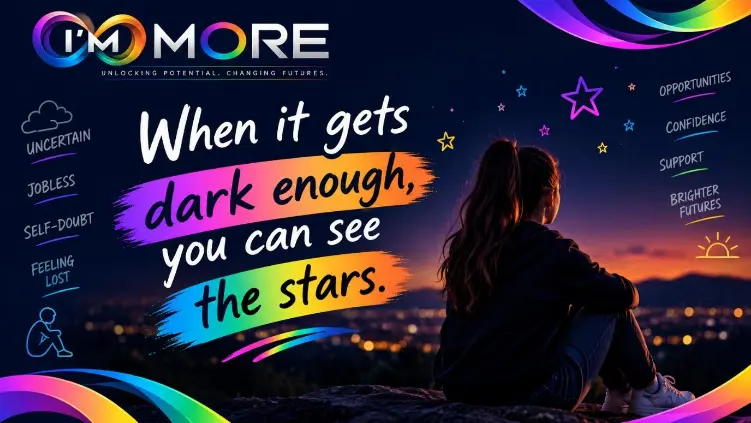
“When it gets dark enough, you can see the stars.”
Feeling Left Behind While Everyone Else Moves Forward
Unemployed and confidence challenges often go hand in hand, especially when you feel uncertain about your future. Have you ever felt like everyone around you is moving forward while you’re standing still? Watching other people getting jobs, earning money, becoming independent and building their futures while you’re struggling to find your own direction can leave you feeling lost and questioning yourself. You might start wondering whether you’re good enough, whether you’ll ever find employment or whether you have anything valuable to offer. These thoughts can slowly affect your confidence, making you feel as though you’re falling behind in life.
For many young people, being unemployed isn’t just about not having a job or earning money. It’s about the emotional impact it can have on your confidence, self-worth and the way you see yourself. When you’re constantly trying to find opportunities but nothing seems to work out, it can become difficult to stay motivated. You might begin comparing yourself to others, questioning your abilities and feeling like you’re not achieving enough. However, something that’s important to remember is that your employment status doesn’t determine your worth or what you’re capable of achieving. The NHS guidance on raising low self-esteem provides practical advice for developing a more positive view of yourself and rebuilding confidence.
How Unemployment Affects Confidence and Self-Worth
Being unemployed can make everyday life feel repetitive and frustrating. You might wake up each morning wondering what you’re going to do with your day, spend hours searching through job websites, filling out applications and waiting for responses that sometimes never arrive. When you keep putting effort into finding work but aren’t getting anywhere, it can feel discouraging. Every rejection can make you question yourself a little more, especially when you don’t understand why you haven’t been given an opportunity. Eventually, you might start believing that you’re not good enough, even though the reality is that finding employment can be challenging for many different reasons. The National Careers Service offers career advice and practical guidance to help people explore employment opportunities and prepare for their next steps.
One of the hardest parts of unemployment is the pressure you can put on yourself. You might feel embarrassed when someone asks what you’re doing with your life or whether you’ve found a job yet. Even when people don’t mean any harm, these questions can make you feel uncomfortable because you might not have an answer. You may begin avoiding conversations about work or comparing your situation with friends who seem to be progressing. Over time, these feelings can affect your motivation, confidence and willingness to try new things.
My Personal Experience of Feeling Lost After College
When I left college, I found myself in a difficult position. I didn’t have many qualifications, and I wasn’t sure what direction I wanted my future to take. I remember feeling lost and worried because I didn’t know what opportunities were available to me. It felt like everyone around me had some kind of plan while I was still trying to understand where I belonged. I wanted to become independent, earn my own money and feel like I was achieving something, but I didn’t know where to begin. That uncertainty made me question myself and whether I was capable of building the future I wanted.
At the time, one of my biggest struggles was feeling like I hadn’t achieved enough. Leaving college without many qualifications made me worry that I wouldn’t have the same opportunities as other people. I started thinking about what employers might expect from me and whether I had the skills they were looking for. It’s difficult to feel confident when you’re unsure of your own abilities, especially when you’re still discovering what you’re good at. Looking back, I realise that I was putting pressure on myself to have everything figured out when I was still at the beginning of my journey.
The Emotional Impact of Unemployment on Everyday Life
Unemployment can also affect your sense of independence. When you’re not earning your own money, you might feel like you’re relying on other people more than you want to. You may have goals, plans or things you want to experience but feel unable to move forward because of your financial situation. This can create frustration, particularly when you’re trying to become more independent. It can make you feel stuck, as though your life is on hold while everyone else is moving ahead.
Another challenge is how unemployment can affect your mental wellbeing. Spending long periods without work can sometimes lead to loneliness, stress and a lack of motivation. Without a regular routine, days can begin to feel the same, and it can become harder to find the energy to keep trying. You might lose confidence in social situations or start withdrawing from people because you feel embarrassed about your circumstances. These feelings can be difficult to talk about, especially when you think other people won’t understand what you’re experiencing. The NHS stress management resources offer practical suggestions for managing stress and supporting your mental wellbeing.
Being Unemployed Does Not Define Your Worth
But being unemployed doesn’t mean you’re unsuccessful, and it certainly doesn’t mean you’re unworthy. Having a job doesn’t automatically make someone more valuable than a person who is still searching for an opportunity. Your worth goes beyond the qualifications you have, the money you earn or the position you hold. You might be someone who is hardworking, creative, caring, determined or willing to learn. These are all valuable qualities, even if you haven’t yet had the chance to demonstrate them in a workplace.
Sometimes, when you’re struggling with confidence, it can be difficult to recognise your own strengths. You might focus so much on what you haven’t achieved that you forget about the progress you’ve already made. Skills aren’t only developed through employment or education. You can develop communication skills through everyday conversations, problem-solving skills through overcoming challenges and resilience through continuing to try when things become difficult. Recognising these abilities can help you begin to see yourself differently. You can also explore I’M MORE’s personal development articles in The Voice for further guidance on recognising strengths and building self-belief.
How to Rebuild Confidence When You’re Unemployed
Rebuilding confidence after unemployment isn’t something that happens overnight. It takes time, patience and the willingness to keep going, even when you don’t see immediate results. Sometimes, progress starts with the smallest actions. Updating your CV, applying for a job, attending a workshop, volunteering or learning something new can help you feel more motivated. These steps might seem small, but they can remind you that you’re capable of making progress and taking control of your future. You can explore I’M MORE’s employment and training resources for practical guidance and opportunities to develop your skills.
It’s also important to remember that you don’t have to face everything alone. Having someone who listens, encourages you and believes in your potential can make a difference. Sometimes, all it takes is one person recognising your strengths to help you begin recognising them yourself. Support and guidance can help you discover opportunities you might not have considered before and give you the confidence to try something new.
How I’M MORE Helps Young People Discover Their Potential
This is why organisations such as I’m More are important. The message behind I’m More is about helping people recognise their potential, develop confidence and believe that they are capable of creating a better future. For someone who feels lost, unemployed or unsure of their abilities, encouragement and opportunities for personal development can be valuable. Everyone deserves the chance to discover their strengths and work towards something meaningful, regardless of their background or previous experiences. You can also explore the I’M MORE on-demand training programme to learn more about developing confidence, skills and employment readiness.
Finding Hope and Direction During Unemployment
The quote “When it gets dark enough, you can see the stars” reminds me that even when life feels uncertain, there can still be hope. Sometimes, when you’re going through a difficult period, it’s hard to imagine things improving. You might feel as though you’re stuck in the same situation with no clear way forward. However, your current circumstances don’t have to determine what happens next. Even if you can’t see your future clearly right now, that doesn’t mean there aren’t opportunities ahead.
Looking back at my own experiences, I’m beginning to understand that success doesn’t happen at the same time for everyone. Some people find employment straight after leaving education, while others need more time to discover their interests, develop their skills or find the right opportunity. Neither journey is more valuable than the other. What matters is recognising that you still have the ability to learn, grow and work towards something better.
If you’re currently unemployed and struggling with your confidence, I want you to know that you’re not alone in feeling this way. It’s okay to feel frustrated, disappointed or uncertain about what comes next. Those emotions don’t make you weak, and they don’t mean you’ve failed. You don’t need to have your entire future planned out today. Sometimes, the most important thing you can do is take one small step forward and remind yourself that your situation can change.
Your Employment Status Is Not Your Identity
Being jobless doesn’t make you worthless. Being unemployed doesn’t make you a failure. And feeling lost doesn’t mean you’ll never find your way. Your journey is still unfolding, and there is so much more to you than your current circumstances. You have strengths, abilities and potential that deserve to be recognised, even if you’re still learning to see them yourself.
Sometimes, it’s during the darkest moments that we begin to discover our own strength. And just like the stars that become visible in the darkness, your potential is still there, even when you struggle to see it.
Your employment status is only one part of your story. It is not your identity, your worth or the limit of your future.













