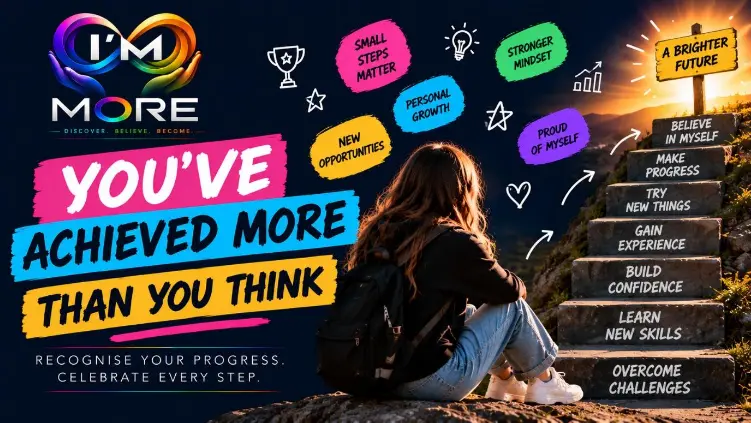
You Might Have Achieved More Than You Think
Have you ever looked back at your life and felt like you haven’t achieved anything?
You might see other people getting jobs, earning qualifications, becoming more independent, or achieving their goals while you’re still trying to figure out what you want to do.
Sometimes it can feel like everyone else is moving forward while you’re standing still.
You might begin questioning yourself, wondering whether you’ve made any progress or whether you’re falling behind.
But just because you can’t see your progress doesn’t mean it isn’t happening.
Not every achievement comes with a certificate, a job title, or something you can show other people.
Sometimes your biggest achievements are the things you’ve overcome, the confidence you’ve developed, or the small steps you’ve taken when everything felt difficult.
Learning to recognise the evidence of your progress can help you understand how far you’ve already come.
Why Do We Struggle to Recognise Our Achievements?
One of the biggest reasons we struggle to recognise our achievements is because we spend so much time comparing ourselves to others.
You might look at someone your age who has a job, a car, or a clear career plan and start feeling like you’re not doing enough.
Social media can make this even harder because we often see other people’s achievements without seeing the challenges they’ve faced along the way.
But everyone’s journey is different.
Some people know what they want to do from a young age, while others need more time to discover their interests, strengths, and abilities.
Your progress shouldn’t be measured by how quickly someone else is moving forward.
It’s about recognising the changes you’ve made in your own life, even when they seem small. The NHS guidance on raising low self-esteem offers practical advice on challenging negative thoughts and building a more positive view of yourself.
What Does Evidence of Progress Actually Mean?
Evidence of progress means recognising the signs that you’re learning, growing, or moving forward.
It doesn’t always have to be something big.
For example, you might have:
- Applied for a job even though you were nervous about rejection.
- Started speaking to people more confidently.
- Learned a new skill or improved something you previously struggled with.
- Attended an interview despite feeling anxious.
- Asked someone for help instead of keeping your worries to yourself.
- Tried a new opportunity outside your comfort zone.
- Started understanding what you want from your future.
- Continued working towards a goal after experiencing a setback.
These experiences might not seem like major achievements, but they can show that you’re developing confidence, resilience, independence, and determination.
Sometimes the evidence of progress is simply being able to do something today that you would have struggled with a few months ago. You can also explore the National Careers Service skills assessment to identify your interests and recognise abilities that may support your future career.
Look Back at Where You Started
When you’re focused on what you haven’t achieved, it’s easy to forget where you began.
Think about yourself six months ago or even a year ago.
What were you struggling with?
What made you feel nervous?
What did you believe you weren’t capable of doing?
Now think about what’s changed.
Maybe you’ve become more comfortable speaking to new people, learned how to manage difficult situations, or started exploring opportunities you wouldn’t have considered before.
You might not be exactly where you want to be, but that doesn’t mean you haven’t moved forward.
Sometimes you need to look back to recognise how far you’ve come.
Start Keeping Track of Your Small Achievements
One of the simplest ways to recognise your progress is by writing down your achievements.
You don’t need a complicated plan or a long list of goals.
At the end of each week, ask yourself:
- What is one thing I achieved this week?
- What did I do that made me feel proud?
- What challenge did I face?
- What have I learned about myself?
- What can I do now that I couldn’t do before?
- What is one thing I want to improve next week?
For example, you might write:
“This week I applied for two jobs, spoke to someone new, and completed something I was nervous about.”
Even if you don’t get the job or everything doesn’t go perfectly, you’ve still taken action and gained experience.
Over time, these small achievements can help you see patterns in your progress.
They give you something to look back on when you begin doubting yourself.
Don’t Ignore the Progress Nobody Else Can See
Sometimes the most important progress happens internally.
You might be learning to believe in yourself, becoming more comfortable expressing your opinions, or developing the courage to try new things.
Other people might not notice these changes, but that doesn’t make them any less meaningful.
For example, if you previously avoided speaking up because you were afraid of being judged, but now you’re beginning to share your ideas, that’s progress.
If you once believed you weren’t capable of achieving anything but have started recognising your strengths, that’s progress too.
You don’t need other people’s approval for your achievements to matter.
Recognising your own growth can be an important part of building self-confidence. For more articles about confidence, self-belief and personal development, explore The Voice from I’M MORE.
What If You Feel Like You’re Not Making Progress?
There might be times when you genuinely feel stuck.
Perhaps you’ve been applying for jobs without success, struggling with motivation, or finding it difficult to decide what to do next.
It’s important to recognise that progress isn’t always consistent.
Some weeks you’ll achieve more than others, and sometimes you may need to rest, ask for support, or change your approach.
Instead of putting pressure on yourself to achieve something big, focus on one manageable action.
That could mean updating your CV, researching a training opportunity, practising a skill, or speaking to someone who can offer guidance. You can explore I’M MORE’s employment and training resources for additional guidance and opportunities.
Small actions won’t solve every problem immediately, but they can help you regain a sense of direction.
Recognise Your Progress With I’m More
At I’m More, the message of Discover. Believe. Become. encourages people to recognise their strengths, build confidence, and explore their potential.
Part of discovering your potential is learning to recognise what you’ve already achieved.
You might not have all the qualifications, experience, or opportunities you want yet, but that doesn’t mean you have nothing to offer.
Your experiences can help you develop valuable qualities such as resilience, communication, determination, and problem-solving.
When you begin recognising your progress, you can start seeing yourself differently.
Instead of focusing only on what you haven’t achieved, you can begin appreciating what you’ve learned and what you’re becoming capable of doing. You can also explore I’M MORE’s on-demand training to discover practical learning opportunities designed to support confidence and personal development.
Your Progress Matters, Even When It Feels Small
If you’re feeling like you haven’t achieved much, remember that your journey isn’t defined by one moment or one achievement.
You don’t have to reach every goal immediately.
You don’t need to have your entire future planned out.
And you don’t have to compare your achievements to somebody else’s.
Start by recognising one thing you’ve done that your past self would have been proud of.
It might seem small today, but it could be evidence of how much you’ve grown.
You might not be where you want to be yet, but that doesn’t mean you’re still where you started.
Give yourself credit for the steps you’ve taken, the challenges you’ve faced, and the effort you’ve made.
Your achievements matter, even when nobody else sees them.
Discover your progress. Believe in your abilities. Become the person you want to be.