

Have You Ever Struggled to Know What You Really Want?
Have you ever found yourself making decisions because it’s what other people expect from you, rather than what you actually want?
Sometimes we spend so much time worrying about what other people think that we forget to ask ourselves what really matters to us.
You might feel pressured to choose a certain career, gain qualifications, find employment, or follow the same path as your friends.
But what happens when those choices don’t feel right for you?
This is where understanding your personal values becomes important.
Your values are the things that matter most to you. They influence your decisions, your goals, and the kind of person you want to become.
Understanding your values can help you build confidence, recognise what makes you unique, and make choices that feel more meaningful.
What Are Personal Values?
Personal values are the beliefs and principles that guide how you live your life.
They’re not necessarily about what you’re good at or what you’ve achieved. They’re about what you believe is important.
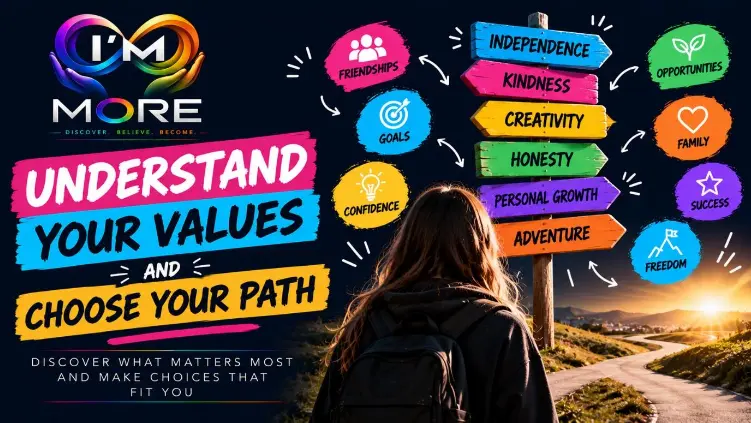
For example, some people value honesty, kindness, independence, creativity, or helping others.
Others might value family, friendship, personal growth, stability, or having the freedom to explore new opportunities.
Some examples of personal values include:
Honesty: Being truthful with yourself and others.
Respect: Treating people fairly and recognising their feelings.
Kindness: Supporting and caring about other people.
Independence: Having the freedom to make your own decisions.
Creativity: Expressing yourself through ideas and imagination.
Personal growth: Learning new things and becoming more confident.
Family and relationships: Building meaningful connections with people.
Determination: Continuing to work towards something important to you.
Everyone has different values, and that’s what makes us unique.
There isn’t one correct set of values that everyone should follow.
Why Is Understanding Your Values Important?
When you don’t understand what matters to you, making decisions can feel overwhelming.
You might find yourself following other people’s opinions, comparing your life to someone else’s, or choosing opportunities simply because they seem like the right thing to do.
But those decisions might not always make you happy or help you move towards the future you want.
Understanding your values can give you a clearer sense of direction.
For example, if you value helping others, you might enjoy opportunities involving teamwork, community projects, or supporting people.
If you value creativity, you might feel more motivated when you’re writing, designing, creating content, or exploring new ideas.
And if you value independence, you might want to develop skills that help you become more confident in making your own choices.
Knowing what matters to you can help you understand why certain opportunities feel right and why others don’t. You can also explore the National Careers Service skills assessment to identify your interests and explore career options that may suit you.
How Can You Discover Your Personal Values?
Sometimes identifying your values isn’t as easy as it sounds.
You might know what you enjoy doing but struggle to explain why those things are important to you.
A good place to start is by thinking about your experiences.
Ask yourself:
What makes me feel happy or proud?
What qualities do I admire in other people?
When have I felt most comfortable being myself?
What is something I would never want to compromise on?
What do I want my future to look like?
What kind of person do I want to become?
Think about moments when you felt proud of yourself.
Maybe you helped someone through a difficult situation, tried something new despite feeling nervous, or stood up for something you believed in.
These experiences can reveal values such as kindness, courage, determination, or honesty.
You might discover that your values have been guiding your actions without you even realising it. For more guidance on understanding your strengths and developing self-awareness, explore The Voice from I’M MORE.
Stop Making Choices Just to Please Other People
One of the hardest parts of understanding your values is learning to make decisions for yourself.
When you’re young, it can feel like everyone has an opinion about what you should be doing.
Your family might encourage you towards a particular career, your friends might be following different opportunities, or you might feel pressured to achieve certain things by a certain age.
Although advice from other people can be helpful, it’s important to remember that you’re the person who has to live with your decisions.
You don’t have to follow someone else’s path simply because it worked for them.
Your future should reflect who you are, not just what other people expect you to become.
This doesn’t mean ignoring advice or refusing support. It means listening to different perspectives while recognising that your own feelings, needs, and values matter too. The NHS guidance on raising low self-esteem offers practical advice for building confidence and developing a more positive view of yourself.
How to Make Choices That Match Your Values
Once you begin understanding your values, you can use them to help guide your decisions.
Before making an important choice, ask yourself:
Does this opportunity match what matters to me?
Will this decision help me grow as a person?
Am I choosing this because I want to, or because I feel pressured?
Does this choice support the future I want to build?
Will I feel comfortable and proud of the decision I’ve made?
For example, imagine you’re offered a job that pays well but doesn’t offer the supportive environment or personal growth you value.
You might decide to explore other opportunities, or you might choose to take the job temporarily because financial stability is important to you.
Neither decision automatically makes you wrong.
Sometimes our values compete with each other, and practical responsibilities affect what choices are available.
The important thing is understanding your reasons and making the most thoughtful decision you can with the options you have. You can explore I’M MORE’s employment and training resources for guidance on developing skills and considering your next steps.
Your Values Can Change as You Grow
Something that’s important to remember is that your values can develop over time.
The things that mattered to you when you were younger might not be the same things you value in the future.
As you experience new situations, meet different people, and learn more about yourself, your priorities may change.
For example, you might once have focused mainly on fitting in with others, but as you grow in confidence, you might begin valuing independence and being yourself.
That’s part of personal development.
Changing your priorities doesn’t mean you’ve failed or lost your identity. It can mean you’re discovering more about who you are and what matters to you. You can also explore I’M MORE’s on-demand training to support your confidence, skills and personal development.
Discover Your Values With I’m More
At I’m More, the message of Discover. Believe. Become. encourages people to recognise their strengths, build confidence, and explore their potential.
Understanding your personal values is an important part of that journey.
When you know what matters to you, it becomes easier to identify opportunities that support your interests, abilities, and goals.
You don’t need to have your whole future planned out.
Sometimes the first step is simply discovering who you are, what you believe in, and what kind of life you want to create.
Your Choices Should Reflect Who You Are
Understanding your values isn’t about having all the answers or making perfect decisions.
It’s about learning to recognise what’s important to you and using that understanding to guide your next steps.
You might make mistakes, change your mind, or discover new things about yourself along the way.
That’s okay.
Start by choosing three values that matter most to you. Think about how they already appear in your everyday life and one small decision you could make that reflects them.
The more you understand your values, the more confident you can become in choosing a path that feels right for you.
Remember, you don’t have to become the person everyone else expects you to be.
You have the opportunity to discover who you are and become the person you want to be.
Discover your values. Believe in yourself. Become who you want to be.













