

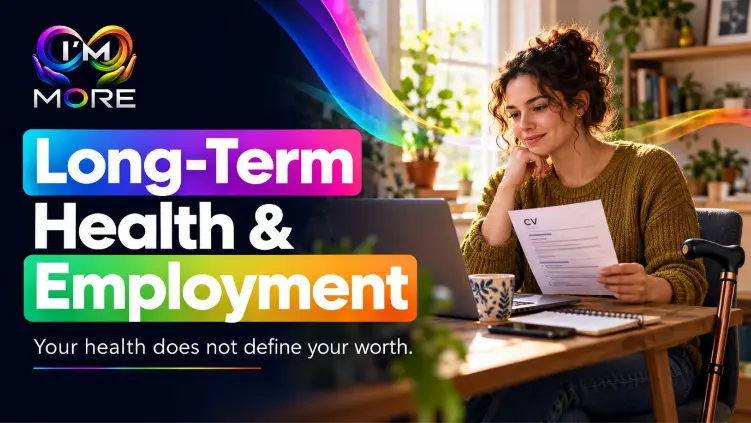
Wanting to work but struggling with your health can be frustrating. You may have ambitions, skills and ideas about your future, yet finding a job that suits your needs can feel difficult. When your health affects what you can do each day, searching for work can bring extra challenges that other people may not see or understand.
Long-Term Health Issues and Employment Challenges
Long-term health issues and employment challenges can make finding suitable work difficult. Wanting to work but struggling with your health can be frustrating. You may have ambitions, skills and ideas about your future, yet finding a job that suits your needs can feel difficult. When your health affects what you can do each day, searching for work can bring extra challenges that other people may not see or understand. Understanding the relationship between long-term health issues and employment can help people recognise the challenges they face when searching for suitable work.
Searching for a job already takes energy. Writing applications, preparing for interviews and travelling to meet employers can feel demanding when you are also managing your health. Someone might need regular breaks, flexible hours or time for medical appointments. Finding a role that accommodates these needs can take time, even when the person is qualified and motivated.
There can also be worry about how an employer will respond. Someone may feel unsure about explaining their condition or asking for support. They might fear being judged before having the chance to show their abilities. Conditions that are not immediately visible can bring another difficulty: feeling that you have to explain or prove why something is challenging. Open conversations about long-term health issues and employment can help employers better understand individual needs and provide appropriate support.
Over time, these experiences can affect confidence. When applications lead nowhere, someone may begin to question their value. They might wonder whether an employer will ever see beyond their health condition and recognise what they could contribute. Repeated disappointment can make the next application feel harder to start.
Watching friends or family progress in their careers can bring mixed emotions too. You can feel happy for someone else while feeling sad about your own circumstances. Seeing others earn money, build independence or talk about their working lives may leave you feeling left behind. However, comparing yourself with someone whose circumstances are different can put unfair pressure on you.
Being unable to work, or needing to work fewer hours, can also affect someone’s sense of identity. People often ask what you do for a living, as though employment explains who you are. When you do not have a job, answering that question can feel uncomfortable. Yet a job title cannot describe your kindness, creativity, knowledge or the relationships you build.
Recognising your abilities can be a starting point for rebuilding confidence. Your strengths might include listening, organising, solving problems or supporting others. These qualities still matter, even if your health currently limits how you use them. You do not need to turn every difficult experience into an achievement to deserve respect.
For people who can work, suitable support can make a difference. Depending on the person and the role, this might include flexible hours, changes to tasks, accessible equipment or opportunities to work from home. Understanding what helps you manage your condition can make it easier to identify roles that may suit you. A suitable job should take account of both your abilities and your health needs.
It is equally important to recognise that employment may not currently be possible for everyone. Some people need to focus on treatment, recovery or managing everyday life. That does not make them lazy or mean they have given up. Looking after your health can take considerable effort, even when that effort is invisible to others.
If you are facing these difficulties, you deserve to be heard and supported. Talking to someone you trust or seeking employment advice that takes your health into account may help you explore your options at your own pace. You do not have to have every answer straight away.
Living with a long-term health condition can change your route into employment, but it does not remove your potential or your worth. Whether you are looking for suitable work, working fewer hours or currently unable to work, you deserve understanding. Your contribution to the world is bigger than your employment status.
Living with a long-term health condition can make finding work more challenging, and those difficulties can affect your confidence. Your health needs deserve understanding, and your skills and ambitions deserve recognition. For some people, the right support can make employment possible; for others, looking after their health must come first. Wherever you are in your journey, you deserve respect and encouragement. Your worth is not measured by whether you have a job, how many hours you work or how quickly you move forward.













