

Introduction: Recognising Potential Beyond the CV
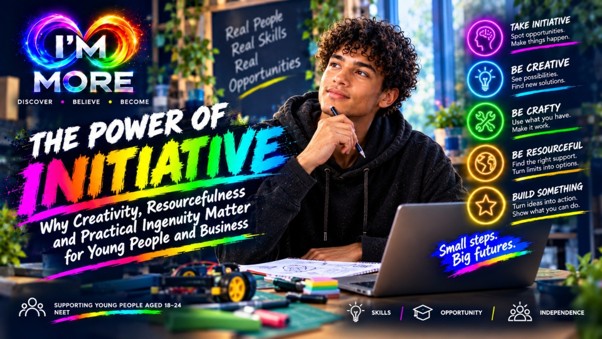
The power of initiative lies in recognising opportunities, developing creative solutions and using available resources to build valuable skills for personal and professional growth. Qualifications and experience can help someone enter employment, but they do not show every strength a person brings. Initiative, creativity and resourcefulness become visible through the way people approach problems, learn unfamiliar tasks and make useful things with the resources available.
These employability skills matter for young people aged 18–24 who are not in education, employment or training (NEET). Someone with limited work experience may already solve practical problems, create digital content or organise responsibilities at home. Those experiences can provide a starting point for development.
At I’M MORE, the ambition is to recognise potential beyond current circumstances and help young people demonstrate it. This means creating opportunities to learn, try ideas and produce evidence that employers can understand. The qualities explored here can support that process while helping businesses adapt and improve.
1. Take Initiative with Sound Judgement
Initiative means noticing what needs attention and taking appropriate action without always waiting for instructions. A project may fall behind, a customer may need unexpected help or a routine process may be confusing. Someone who takes initiative asks what they can contribute and considers a useful next step.
That step might be asking a thoughtful question, offering to prepare materials or suggesting a clearer way to share information. Good initiative includes understanding your responsibilities, checking when permission is needed and seeking advice. It should respect instructions and the boundaries of your role.
Young people may need time to feel comfortable putting themselves forward, especially after rejection or criticism. Small responsibilities, clear guidance and constructive feedback can help. A quiet or hesitant response does not establish a lack of potential. Support should create a fair opportunity to practise making decisions and taking ownership.
2. Recognise Creativity in Everyday Activities
Creativity involves generating ideas and considering different ways to approach a challenge. It can appear in design, music or writing, but also in organising information, improving a customer experience or adapting a plan. An effective idea may combine familiar approaches to meet a different need.
Young people often develop relevant abilities through interests that do not appear on a traditional CV. Creating videos can involve planning, editing, research and attention to an audience. Modifying clothing, producing music or taking photographs may involve experimentation, technical learning and presentation.
A hobby does not automatically make someone ready for a particular job. It can reveal skills worth developing and provide material for a project or portfolio. I’M MORE can help young people identify what they did, how they learned and where those abilities might be useful. Practical demonstrations and collaborative projects can also give people different ways to show their strengths.
3. Use Practical Ingenuity Responsibly
In this context, being crafty means finding clever, practical ways to achieve something. It might involve repairing equipment, adapting an existing tool or simplifying a task. Practical ingenuity becomes valuable when it helps meet a need while respecting safety, quality and professional standards.
Consider a small organisation preparing promotional material on a limited budget. Someone could explore free design tools, learn basic layout principles and ask a knowledgeable person for feedback. A simple design may meet the immediate need while helping the creator develop new skills.
Resourceful decisions should acknowledge limits. Some tasks need specialist expertise, appropriate equipment or more funding. Identify those needs and ask for help when necessary. A low-cost solution is useful when it is suitable for the task and does not create avoidable problems elsewhere.
4. Make the Most of Available Resources
Resources include more than money and equipment. They can be information, time, personal skills and people willing to share knowledge. Being resourceful includes finding reliable guidance, asking the right question and recognising when someone else’s experience could help.
A young person creating an online portfolio might begin by photographing work with a smartphone, using a free website tool and studying examples of clear presentation. Feedback can help them improve the result gradually. They can describe the choices they made and the skills they developed, even if the portfolio starts modestly.
When an idea fails or equipment becomes unavailable, reassess the problem and consider alternatives. These situations provide opportunities to practise judgement and persistence. Financial hardship, limited transport, caring responsibilities and other barriers still matter. Resourcefulness helps identify possible actions alongside the support and opportunities a person may need.
5. Turn an Idea into Evidence of Ability
Building something means moving from a thought to an outcome through planning, effort, feedback and improvement. The result could be a website, an event plan, a video or a better way to organise information. Its value includes the process and learning behind it.
A young person interested in marketing could create a sample campaign for a fictional business. Someone exploring administration could organise a spreadsheet and explain how the system works. A customer service exercise could show how they listen and respond to an enquiry.
These activities do not replace experience in a real job, but they provide specific examples for applications and interviews. Record the purpose of the task, your contribution, the resources used and what changed after feedback. Explain what you would improve next time. This helps employers assess evidence rather than relying only on statements such as “I am creative.”
6. Give Young People a Fair Chance to Demonstrate Skills
Young people who are NEET have different circumstances and ambitions. Some are seeking work, some are unsure of their direction, and others face health, financial or educational barriers. Their current status describes participation in work and learning; it does not define their character or future capability.
A CV is useful, but it cannot capture every example of curiosity, responsibility or practical ability. Supported activities can help someone recognise and describe strengths gained outside formal employment. Organising an event might develop planning and communication; creating digital content might demonstrate technical learning and attention to detail.
Achievement can also help build confidence. Completing a manageable project gives someone an experience they can point to when considering a harder task. Progress should be assessed individually and supported with feedback. Confidence can contribute to development while practical barriers and wider support needs are addressed.
7. Apply These Qualities within I’M MORE
Initiative and creativity can help an organisation improve its everyday work. Team members may notice unclear instructions, duplicated effort or a more accessible way to present information. Discussing these observations and testing appropriate changes gives people a practical role in improving outcomes.
Different young people may engage with different activities. Some prefer structured tasks; others respond to a project linked to their interests. Workshops, digital projects and supported presentations can offer varied ways to practise skills. Gather feedback and adjust activities according to what participants need.
Partnerships may extend available knowledge or equipment. An employer could introduce a workplace skill, or a volunteer could review a portfolio. Arrange contributions responsibly and recognise where additional resources are needed. Helping participants prepare clear project examples can also support more useful conversations with employers about their abilities.
8. Build a Practical Development Framework
Discover: identify existing strengths. Ask about interests, hobbies, responsibilities and situations in which someone solved a problem or adapted a plan. Help them describe the actions involved and recognise skills they may previously have overlooked.
Believe: offer supported challenges. Break an unfamiliar activity into manageable stages, explain expectations and welcome questions. Give constructive feedback and allow appropriate decisions. Confidence can grow through experience as a participant learns what they can do and where they need guidance.
Become: turn learning into practical evidence. Choose a project that relates to the person’s interests or possible career direction. Document the work, difficulties, changes and lessons. A completed piece can become part of a portfolio or a specific example for an interview.
Connect: link demonstrated skills with realistic opportunities. Help participants explain their contributions in language relevant to employers. Where appropriate, explore work experience, apprenticeships, training or interviews. Some people will be ready sooner than others, so adapt the next step to their circumstances.
9. Help Employers Recognise Capability Fairly
Confidence in conversation is not a reliable substitute for evidence of practical ability. A quieter candidate may be resourceful, and an unconventional background may include useful learning. Ask about relevant examples and assess them consistently against the role’s requirements.
Useful questions include: What have you created or improved? How did you work with limited resources? What happened when the original plan failed? How did you learn a new skill, and what would you do differently next time?
Short, relevant work samples or practical exercises can help candidates explain their approach. Make expectations clear and consider the relevance of the example. The purpose is to understand capability more accurately and give people with limited employment history an opportunity to demonstrate what they have learned.
10. Start Small and Improve through Experience
You do not need a complete set of skills or perfect circumstances before beginning a suitable project. Choose a manageable challenge, identify available resources and decide what help you need. Try an approach, review the result and make a practical improvement.
A completed task, a new skill or a first presentation can offer evidence for the next attempt. Businesses can use the same process to test ideas and improve their work. Initiative needs sound judgement, and resourcefulness should sit alongside appropriate training, investment and fair opportunities.
For someone unsure where to begin, a useful first task is to identify one interest and one small thing they could create or improve. Decide who it is for, what a useful result would look like and when to review it. Keeping a record of the process makes the learning easier to explain afterwards.
Conclusion: Give Potential an Opportunity to Develop
Initiative, creativity and resourcefulness can help people solve problems, learn and contribute to organisations. They become easier to recognise when people have opportunities to use them and explain the results. Limited qualifications or work experience should prompt a closer look at available evidence and development needs.
For I’M MORE, the opportunity is to connect encouragement with practical action: help young people discover strengths, build belief through supported experiences and develop evidence of their abilities. Employers and partners can contribute by creating fair ways to demonstrate those skills and explore a realistic next step. Discover. Believe. Become.













