
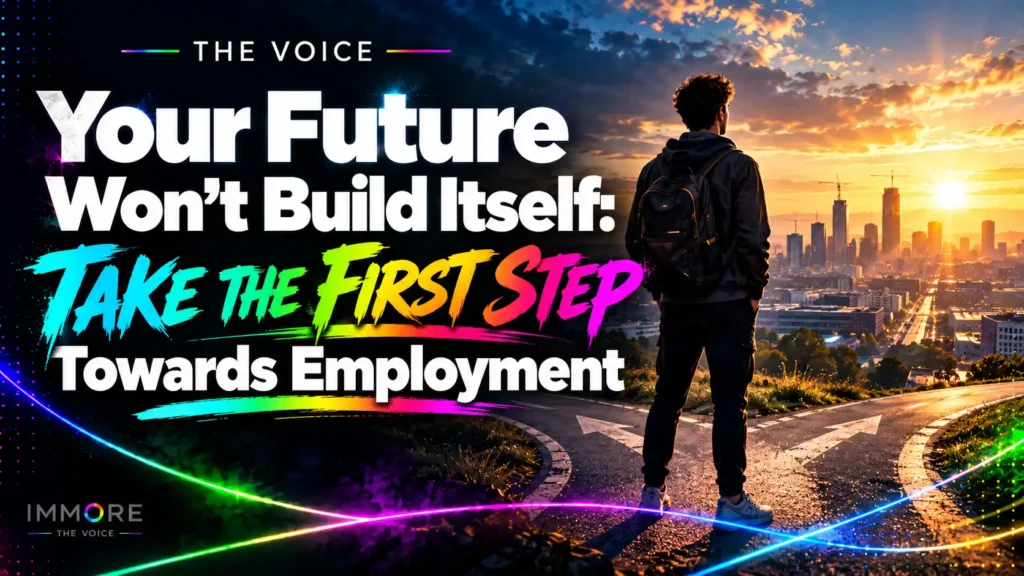
The hardest part can be getting started
Finding motivation to get into work can be challenging when you are unsure where to begin or what steps to take towards employment. When you are 18 to 24 and looking for work, it can seem as though everybody else knows where they are going. Some friends are earning. Others are studying or training. You might be at home, refreshing job websites and wondering whether you are falling behind. That comparison can make a simple application feel like a judgement on your entire future. It is not. Your next move matters more than anyone else’s timeline.
There is a difference between wanting a job and building a job-search routine. A vague promise to “look properly tomorrow” has no deadline, no target and no way to measure progress. A better approach is to choose one useful action you can complete today.
Make the first move smaller
You do not need to send twenty applications in a panic. Start by writing down two types of work you are willing to explore, identifying the skills each requires, and finding one vacancy worth studying. That turns uncertainty into information. A customer-facing role may require communication and reliability; a warehouse position may value care, punctuality and teamwork. The next application becomes more specific instead of more frightening.
If starting feels overwhelming, set a twenty-minute timer: spend five minutes searching, ten minutes understanding one role and five minutes deciding the next step. When you finish, record what you did. Small, repeatable actions are more useful than an occasional burst of motivation.
Do not confuse movement with results
Sending an application is an action. Receiving an offer is an outcome partly controlled by employers, competition and vacancies. If you judge yourself only by offers, you may overlook genuine progress: a clearer CV, a better explanation of your strengths, improved interview answers or a wider understanding of local opportunities.
Keep a simple record of applications, dates, follow-ups and lessons. This prevents you applying twice by mistake and makes it easier to identify what to improve. It also gives you evidence that you are taking responsibility for your search even when replies are slow. For help tailoring applications, use Find a job – GOV.UK.
Explore more than one doorway
An immediate full-time job is not the only route. Depending on your situation, part-time employment, apprenticeships, work placements, volunteering and short courses may help you build experience. Each route has different practical and financial implications, so compare them carefully rather than accepting the first option you see.
Use reliable vacancy sources and examine eligibility, hours, pay, travel, training arrangements and whether the opportunity genuinely develops useful skills. Never pay a suspicious recruitment fee or share sensitive financial details with an unverified employer. You can also explore Find an apprenticeship – GOV.UK.
The seven-day starting challenge
Day one: list three strengths and two areas to improve. Day two: research two roles. Day three: update your CV. Day four: prepare a tailored application. Day five: submit it and save the details. Day six: explore an alternative route such as an apprenticeship. Day seven: review what you learned and set next week’s target.
This is a framework, not a test. Adapt it to your circumstances, especially if health, caring responsibilities, transport or money make some steps harder. Ask for support where necessary; independence does not mean doing everything alone.
A future is built, not guessed
Your life will not be transformed by one motivational quote, and effort alone cannot guarantee employment. But you can become better prepared for opportunities through actions you repeat. You may not control the day an employer says yes. You can control whether today leaves you more informed, more organised and more ready than yesterday.
IM MORE – The Voice stands for Discover. Believe. Become. Discover what you could offer, believe that growth is possible, and become someone who follows intention with action. Find further support and ideas at IM MORE.