Introduction: Your mindset can change your direction
Have you ever felt as though you are waiting for your life to move forward? Perhaps you are looking for employment, hoping to progress in your current job, or trying to work out how to build a better future for yourself.
You might have the ambition, the ideas and the desire to succeed, but something continues to hold you back. It could be a lack of confidence, fear of failure, a negative attitude, poor habits or simply not knowing where to begin.
The truth is that wanting a better life and actively working towards one are two different things.
At IMMORE, we believe personal growth starts when you begin to take responsibility for the person you are becoming. This does not mean that every obstacle is within your control. Opportunities can be limited, employers can make difficult decisions, and circumstances can create genuine barriers. However, the way you prepare yourself, respond to setbacks and use the opportunities available to you can make a meaningful difference.
You cannot always control when an opportunity arrives, but you can work on becoming ready for it.
Whether you are searching for your first job, rebuilding your confidence after unemployment or looking to progress in your career, developing the right mindset can help you take that next step.
1. Stop waiting for the perfect opportunity
One of the biggest mistakes we can make is convincing ourselves that we need everything to be perfect before we begin.
We tell ourselves that we will start when we feel more confident, when we have more experience, when we have more money or when the right opportunity finally comes along.
But waiting for the perfect moment can become a habit. The longer we wait, the easier it becomes to remain in the same position.
Building a career rarely happens through one perfect opportunity. More often, it develops through small decisions, consistent effort, lessons learned from mistakes and the courage to try something new.
If you are looking for work, this could mean improving your CV, researching different industries, practising interview questions, developing your skills or contacting employers. If you are already employed, it could mean asking for feedback, volunteering for a new responsibility or learning something that will help you progress.
You do not need to have your entire future figured out before you take your next step.
Start with what you can do today.
Every application you complete, every skill you develop and every constructive conversation you have can contribute to your progress. Not every action will produce an immediate result, but taking action gives you the opportunity to learn and improve.
Your next chapter does not begin when everything falls into place. It begins when you decide to move forward.
2. Raise your standards and change your attitude
Tony Robbins’s words about raising your standards offer an important lesson for the workplace. Meaningful change requires more than saying that you want things to improve. It involves changing what you expect from yourself and how you behave.
What standards do you set for yourself at work?
Do you arrive on time? Do you communicate respectfully? Do you take responsibility when you make a mistake? Do you put effort into your responsibilities even when the work is difficult or you are not being watched?
These everyday decisions help shape your professional reputation.
You do not have to be the most experienced person in the room to demonstrate professionalism. You can show willingness to learn, respect for others, reliability and a positive approach to your responsibilities.
Raising your standards does not mean expecting perfection from yourself. Everyone makes mistakes, experiences difficult days and has areas in which they need to improve. The difference is being willing to recognise those areas and work on them rather than making excuses for them.
Start asking yourself:
What habits are holding me back?
What could I do better in my current situation?
How do I respond when someone gives me constructive feedback?
Am I behaving in a way that supports the future I want?
Your standards should reflect the person you want to become, not simply the circumstances you find yourself in today.
When you begin to take your own development seriously, you give yourself a stronger foundation for professional growth.
3. Motivation gets you started, but discipline keeps you moving
Motivation is powerful. It can give you the energy to set goals, make changes and imagine a different future.
However, motivation does not always last.
There will be mornings when you feel ready to take on the world and others when you struggle to find the energy to do anything. You may apply for several jobs without receiving a response. You may work hard towards a goal and feel as though you are making very little progress.
These moments can test your commitment.
This is where discipline becomes important.
Discipline means continuing to work towards your goals even when you are not feeling particularly motivated. It means creating habits that support your progress instead of relying entirely on how you feel each day.
In the workplace, discipline might mean completing a task properly, preparing for the day ahead, managing your time effectively or following through on something you have promised to do.
When searching for employment, it might mean setting aside time to apply for suitable roles, researching employers and improving your application materials instead of giving up after a few rejections.
The key is to make progress manageable.
You do not need to transform your entire life overnight. Choose a few practical actions you can repeat consistently. As those actions become habits, you can gradually build on them.
Remember, discipline is not about never having a bad day. It is about learning how to return to your goals after one.
4. Develop a growth mindset
Your mindset influences how you interpret challenges, mistakes and feedback.
A limiting mindset can lead you to believe that your abilities are fixed or that one setback defines what you are capable of achieving.
For example, after being rejected for a job, you might think, “I’m not good enough, and nobody is going to employ me.”
That conclusion can damage your confidence and discourage you from trying again.
A growth mindset encourages a different response.
Instead of treating rejection as proof that you cannot succeed, you can ask what the experience might teach you. Was the role a good match for your skills? Could your CV communicate your strengths more clearly? Would practising interviews help? Is there a qualification or practical skill that could strengthen your applications?
These questions do not guarantee success, but they give you something constructive to work with.
The same principle applies at work.
If you struggle with a new task, you can seek guidance and practise. If you receive criticism, you can consider what is useful without treating the feedback as a judgement of your entire character. If you make a mistake, you can acknowledge it, learn from it and improve the way you work.
A growth mindset does not mean pretending that every challenge is easy or that effort alone guarantees a particular outcome. It means recognising that your current abilities and circumstances do not have to define your future.
You may not be where you want to be yet, but you can keep developing the skills, habits and experience that help you move forward.
5. Build confidence through action
Many people believe they must feel confident before they can take action.
In reality, confidence can develop through taking action, gaining experience and learning that you are capable of handling situations that once felt uncomfortable.
Think about applying for a job that interests you but seems challenging. You might feel nervous about submitting your application because you are unsure whether you meet every requirement.
If you wait until all your doubts disappear, you might never apply.
Instead, assess the role honestly, identify the skills you already have and consider where you may need further development. If you meet the essential requirements and believe the position is suitable, give yourself the chance to be considered.
The same applies to speaking up in meetings, asking questions, learning new responsibilities or putting yourself forward for progression.
You will not always get the result you want. However, each experience can help you understand yourself better and identify what to work on next.
Confidence is not about believing that you will never fail. It is about trusting yourself to respond, learn and continue after setbacks.
Start with manageable challenges. Each time you take a positive step outside your comfort zone, you give yourself another opportunity to develop.
6. Understand the importance of attitude and professionalism
Your attitude is not the only factor that determines workplace success. Qualifications, experience, working conditions, management and access to opportunities all matter.
Nevertheless, how you approach your responsibilities can influence the way you work with others and the reputation you build.
Professionalism is demonstrated through everyday behaviour.
It includes being reliable, communicating clearly, respecting colleagues, accepting responsibility and being willing to learn. It also means understanding that other people are affected by the way you approach your work.
Imagine two employees with similar levels of experience. One takes feedback seriously, communicates when there is a problem and makes a genuine effort to improve. The other repeatedly ignores instructions, blames colleagues and refuses to acknowledge mistakes.
Over time, their behaviour may influence the trust others place in them and the responsibilities they are given.
This is why personal development matters.
Working on your attitude does not mean accepting disrespectful treatment or staying silent about unfair conditions. Professionalism includes setting appropriate boundaries, raising legitimate concerns and treating yourself and others with respect.
The aim is to develop a way of working that reflects your values and supports the future you want to build.
Before focusing only on what you want from an employer, consider what you can contribute, what you can learn and how you can become someone others can depend on.
7. Learn to handle rejection without losing direction
Rejection can be one of the most difficult parts of building a career, particularly when you are trying hard to improve your circumstances.
You might spend time preparing an application, researching a company and imagining what the job could mean for your future, only to receive a rejection or hear nothing at all.
After repeated disappointments, it is understandable to feel frustrated.
However, it is important not to allow every rejection to become a statement about your worth.
Recruitment decisions can depend on many factors, including experience, qualifications, competition and the employer’s particular requirements. Sometimes, you may not receive enough feedback to understand why you were unsuccessful.
You cannot control every hiring decision, but you can control how you respond.
Give yourself permission to feel disappointed, then return your attention to what you can do next. Review your application where possible, look for patterns in feedback and consider whether a different approach could improve your chances.
You might also widen your search, explore entry-level opportunities, investigate apprenticeships or look into training that fits your circumstances.
Persistence does not mean repeating the same action indefinitely without reflection. It means continuing to pursue your goal while being willing to adapt your approach.
Your career is not decided by one interview, one rejection or one difficult period.
Keep learning, keep applying where appropriate and remember that progress can take longer than you expected.
8. Take responsibility for your personal development
Taking responsibility is an important part of building a stronger professional mindset.
It means recognising the areas where you have influence and being willing to act on them.
Perhaps you need to improve your communication skills, become more organised, manage your time better or develop confidence when meeting new people. Perhaps you need to reconsider the types of roles you are applying for or identify a more realistic route into your chosen industry.
Acknowledging these areas is not about criticising yourself. It is about giving yourself a clearer starting point.
You can begin by identifying three things:
Your strengths: What can you already do well? Which skills, experiences or personal qualities could help you in the workplace?
Your obstacles: What is making progress difficult? Are there gaps in your skills, confidence, knowledge or access to opportunities that you need to address?
Your next steps: What practical actions could help you make progress over the next week or month?
You may not be able to resolve every obstacle immediately. Some challenges require financial resources, training, support or changes in circumstances. It is important to acknowledge these realities rather than assuming that every barrier can be overcome through attitude alone.
However, identifying your obstacles helps you decide where to focus your effort and where you may need support.
Personal development is an ongoing process. You are not expected to have every answer today. You are expected to remain open to learning and to make constructive choices wherever you can.
9. Create your own action plan
A positive mindset becomes more useful when it is connected to practical action.
If you want to improve your workplace performance or move towards employment, try creating a simple action plan.
Step one: Define your goal.
Be specific about what you want to achieve. You might want to secure an interview, improve a particular workplace skill, gain a qualification or prepare yourself for a promotion.
Step two: Identify what you need.
Consider the experience, knowledge, skills or support that could help you reach your goal. Research your options and be realistic about the time and resources involved.
Step three: Break the goal into smaller actions.
Large goals can feel overwhelming. Smaller steps make it easier to begin. For example, you could update one section of your CV, complete a training module, practise answering interview questions or ask someone for feedback.
Step four: Build a routine.
Choose a realistic amount of time to work towards your goal. Consistency is generally more sustainable than trying to do everything at once.
Step five: Review your progress.
At the end of each week, look at what you have completed, what you have learned and what needs to change. If an approach is not working, consider an alternative.
Step six: Keep moving forward.
Celebrate progress without losing sight of the bigger picture. Every completed step gives you something to build on, even if the final result takes time.
Your action plan does not have to be complicated. It needs to be clear enough to help you turn intention into action.
10. Stop waiting and start becoming
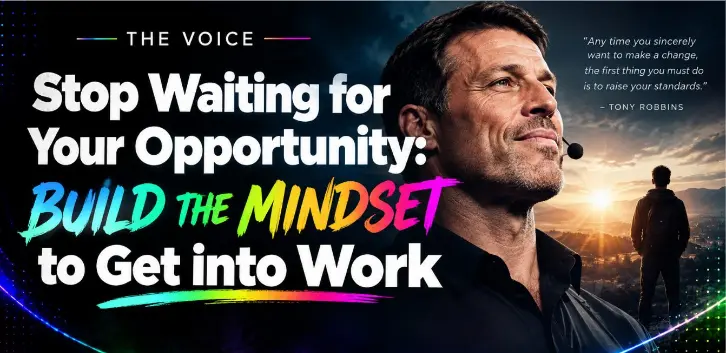
The message behind the IMMORE image is not simply to work harder. It is to recognise the role your mindset, behaviour and decisions can play in shaping your direction.
You may be at the beginning of your career. You may be trying to find employment after a difficult period. You may have a job but feel that you are capable of more.
Wherever you are starting from, you can begin by asking yourself a different question.
Instead of asking only, “When will my opportunity arrive?”, ask, “What can I do today to prepare for the opportunities I want?”
That change in perspective can help you focus on your development rather than spending all your energy waiting for circumstances to change.
Build your confidence. Improve your habits. Learn from your mistakes. Treat people with respect. Develop your skills. Set goals that matter to you and take practical steps towards them.
You will still encounter challenges, and there will be times when your progress feels slower than you would like. That does not mean your effort is wasted or that you should ignore genuine barriers. It means learning to adjust, seek support when necessary and keep working towards what matters to you.
You do not have to become a completely different person overnight. You need to be willing to develop the person you are today.
IMMORE — The Voice
“Any time you sincerely want to make a change, the first thing you must do is to raise your standards.”
— Tony Robbins, Awaken the Giant Within
Final thoughts: Your next chapter starts with you
At IMMORE, we believe that personal growth is about more than reaching a destination. It is about becoming more aware of who you are, recognising your potential, strengthening your values and taking responsibility for the steps that move you forward.
The workplace can challenge your patience, confidence and determination. It can also provide opportunities to learn, develop new skills, build relationships and discover what you are capable of achieving.
You do not need to wait until you feel completely ready to begin improving yourself.
Start where you are. Work with the resources available to you. Learn from the people around you and be willing to accept constructive feedback. Set standards that reflect the professional and personal qualities you want to develop.
Most importantly, do not confuse your current situation with your final destination.
Your circumstances may explain where you are today, but they do not have to determine every step you take tomorrow.
Stop waiting for your opportunity. Build the mindset, develop the skills and take the action that will help you move towards it.
Because at IMMORE, the message is simple: there is always more room to grow, more to learn and another step you can take towards becoming the person you want to be.