I’m Still Working It Out Too
Finding your direction in life can feel overwhelming when you’re young, unsure about your future and still discovering your strengths, interests and career opportunities. People ask young adults what they want to do with their lives as if the answer should already be obvious. What career are you going into? Where do you see yourself in five years? Are you earning enough? It can feel like everyone expects a plan, even when you are still discovering what you enjoy and where your strengths might fit.
I’m not writing this as somebody who has already figured everything out. I’m building professional experience myself. Through the Youth Guarantee scheme, I was given an opportunity to develop my skills with Ninja Business Group, working primarily on IM MORE. That opportunity has pushed me into unfamiliar territory: research, articles, digital content, graphic design and SEO.
I want to become more confident and more capable, but I’m not going to pretend those skills arrive instantly. If you are 18–24 and unsure what comes next, I understand why that question can feel much bigger than it sounds.
What the Gym Taught Me About Starting Again
Boxing, jiu-jitsu and mixed martial arts have been an important part of my background. They taught me that you do not walk into a gym already knowing every technique. You work on what you are weak at. You listen, practise, repeat and accept that other people may be further ahead.
Business demands different abilities. Knowing how to train does not automatically mean I know how to research a topic properly or prepare an article for publication. But the willingness to be coached, ask questions, keep practising and take responsibility is transferable.
Being a beginner isn’t embarrassing. Refusing to learn because you are afraid of looking like one can keep you stuck.
You Can Feel Behind Without Actually Being Behind
It is easy to look at someone else your age and focus only on what they have: the car, the wages, the qualifications, the job title. You rarely see their whole story. Maybe they had more support, found the right opportunity earlier or took a different route.
Comparison can leave you feeling that your starting point is not good enough. But the real question is not whether your life looks impressive compared with someone else’s. It is whether you are taking steps that move you towards a future you actually want.
At IM MORE, I’m learning to measure development through the quality of my work, the responsibilities I can handle and whether I can complete tasks with less supervision. Those are quieter signs of progress, but they matter.
Choosing a Direction Without Pretending It’s Permanent
You don’t need to pick your forever career today. A useful first direction might simply be “I want to explore work that involves helping people”, “I want to develop digital skills” or “I want to understand what an apprenticeship involves”. A starting direction is something you can test, not a contract with the rest of your life.
If you’re unsure what your strengths point towards, try the National Careers Service skills assessment. It can suggest areas to explore; you can then look at job profiles in Explore careers. Neither tool can decide your future for you, but both can help you ask more specific questions.
What If I Choose Wrong?
Fear of choosing the wrong thing can make doing nothing feel safer. But starting a course, applying for a suitable entry-level role or trying a new project can give you evidence about what you like and what needs developing. Learning that something is not right for you is still useful information.
That doesn’t mean every risk is worth taking. Consider your finances, caring responsibilities, health, travel and support needs. If you are thinking about paid training, the official Find an apprenticeship service is one option to explore alongside other employment routes.
It also helps to separate worries you can act on from worries you cannot solve today. The NHS guide to tackling worries explains practical ways to write concerns down and focus on what is manageable.
The Difference Between Wanting More and Doing More
I can say that I want to be more independent at work. But that means little unless I do something with it. I need to understand instructions, research alternatives, plan my time and produce work that meets the standard expected of me. If I cannot solve something, I should be able to explain what I tried before asking for help.
That is one lesson I want to share with other young people: motivation is useful, but action is what allows you to test your ability. The first task does not have to be huge. It has to be real.
Five Steps for Anyone Who Feels Lost
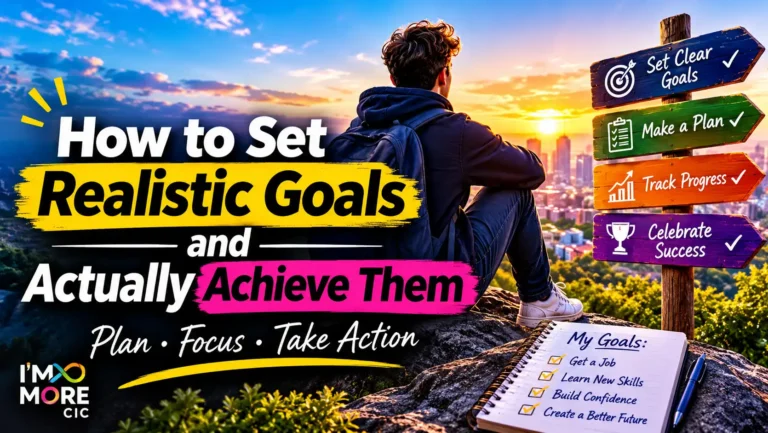
- Write down three things you enjoy, three skills you already have and one skill you want to develop.
- Explore two realistic routes into work or training, rather than trying to research every career at once.
- Choose one small action: update your CV, contact a careers adviser or apply for a role you meet the requirements for.
- Give yourself a deadline you can actually keep. Be specific about what you will finish and when.
- Review what you learned at the end of the week. Change direction if the evidence suggests you should, rather than judging yourself for trying.
A Seven-Day Direction Challenge
Day 1 — Name what matters most to you right now: income, learning, independence, confidence or something else.
Day 2 — List skills you have gained from school, sport, home responsibilities, volunteering or previous work.
Day 3 — Research two job or training pathways.
Day 4 — Speak to someone knowledgeable or use a reputable careers resource.
Day 5 — Take one practical employment action.
Day 6 — Identify what made the action difficult and how to make the next attempt easier.
Day 7 — Write a short plan for the following week.
My Next Chapter Is Still Being Written
I want to make the most of my opportunity with IM MORE. I want to improve the work I produce, become more dependable and carry the discipline I know from sport into my professional life. I don’t know every answer about where that will take me.
But I do know that waiting until I feel completely ready would mean missing the chance to learn now. If you are still finding your direction, you can take your next step without pretending you know exactly where the whole road leads.
Discover. Believe. Become. — IM MORE
Find more personal-development content at IM MORE.