I’m Still Figuring Things Out Myself
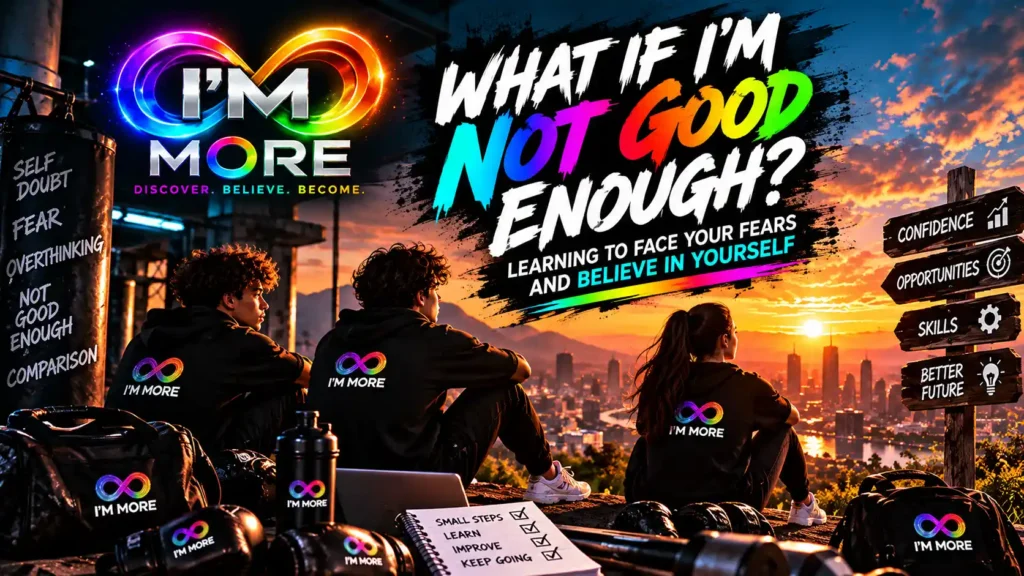
The fear of not being good enough can stop young people from exploring opportunities, trying new experiences and recognising their own potential.
I’m not going to pretend I’ve got my whole life figured out. I’m still young, still learning and still trying to understand what I want to achieve and the kind of person I want to become. I know I’m not the only one.
When you’re between 18 and 24, it can feel as though everyone expects you to know exactly what you’re doing. People ask what career you want, what your plans are and where you see yourself in five years. What happens when you don’t know all the answers?
Sometimes self-doubt stops you from taking an opportunity before you’ve even given yourself the chance to try. I’m learning that overcoming fear isn’t about suddenly becoming confident at everything. Sometimes it’s simply about having the courage to begin.
What Combat Sports Taught Me About Fear
Boxing, jiu-jitsu and mixed martial arts have been important parts of my life. These sports are not just about fighting. They require patience, practice, resilience, discipline and the willingness to learn from people who are more experienced than you.
You can train hard and still have a difficult session. You can practise a technique repeatedly and still struggle to get it right. You can walk into a gym and be surrounded by people whose abilities are far beyond yours. But you don’t improve by avoiding every challenge. You improve by listening, adjusting and returning to practise.
That makes me think about life outside the gym: if I can accept being a beginner in combat sports, why shouldn’t I accept being a beginner in my professional life? I wouldn’t expect to master a complicated technique the first time. I shouldn’t expect to understand everything about business immediately either.
Being inexperienced doesn’t mean being incapable. It means there is something to learn.
Starting Work Has Been a Different Kind of Challenge
Through the Youth Guarantee scheme, I was given an opportunity to develop professional skills with the Ninja Business Group, working mainly on IM MORE. My responsibilities include researching and writing articles, developing motivational content, learning about SEO, working with graphics and understanding digital content.
That is a different environment from combat sports. In the gym, progress might mean improving technical skills, fitness or composure. At work, progress might mean understanding a brief, researching a topic properly, communicating clearly or producing something that meets a professional standard.
My background in sport gives me useful habits, but it doesn’t automatically make me good at business. I have to develop new skills and be willing to accept guidance. I see this opportunity as a chance to contribute, become more independent and build experience that will help me in the future.
You don’t have to arrive at an opportunity knowing everything. You do need to be prepared to learn.
The Fear of Not Being Good Enough
You might look at a vacancy and see responsibilities you have never had. You might want an apprenticeship but worry that somebody else will know more. Or you might decide not to apply because you assume an employer won’t choose you.
When somebody starts boxing, no one reasonably expects them to perform like an experienced professional. The same is true of many entry-level work opportunities. Some roles do require qualifications or previous experience, but other routes are designed for people who are learning.
Instead of immediately deciding that you are not good enough, ask: What can I already do? What do I need to learn? Which next step would make me a stronger candidate? For career and training options, the National Careers Service offers practical information and guidance.
What If I Fail?
Nobody likes rejection or embarrassment. But if you become so frightened of failure that you stop trying, you also stop giving yourself opportunities to develop. You avoid the interview, leave the application unfinished or decide not to ask the question.
In combat sports, avoiding every difficult situation would make progress almost impossible. You need practice, resistance, correction and the chance to learn from mistakes. I am trying to bring the same approach into professional work.
If an article I write needs improvement, the important question is why. Did I misunderstand the instructions? Was the research incomplete? Did I rush? Could I ask a more useful question next time? Those are things I can work on.
Making a mistake is not the same as being a failure. A disappointing result can give you information about what to do next.
Learning to Take Constructive Criticism
In the gym, a coach might point out that your defence needs work or that you are repeating a technical mistake. That correction is part of the learning process. In a workplace, feedback on research, structure, deadlines or communication can serve a similar purpose.
I want to become better at understanding feedback and using it. That does not mean accepting bullying or disrespect. There is a difference between somebody helping you improve and somebody deliberately putting you down. Learning that difference matters.
Being corrected doesn’t necessarily mean you are failing. Sometimes somebody is showing you how to get better.
Stop Comparing Your Beginning to Somebody Else’s Progress
It is easy to look at people your age who already have jobs, cars, qualifications or their own homes and wonder why you are not at the same stage. But people have different starting points, circumstances and levels of support. A comparison does not tell the whole story.
My experience in boxing, jiu-jitsu and MMA is different from the experience of someone who has already spent years in business. That does not mean I have nothing to contribute. It means I am building on one set of skills while developing another.
I want to judge my progress by the knowledge I gain, the quality of work I produce and the responsibilities I can handle, not only by what somebody else appears to have achieved.
The MMA Mindset: Getting Comfortable with Being Uncomfortable
Growth sometimes involves discomfort: learning a new technique, asking a question, presenting an idea or taking responsibility for unfamiliar work. Feeling unsure does not automatically mean you are in the wrong place.
But I also think it is important to distinguish healthy challenges from unsafe situations, unreasonable treatment or distress that needs support. You can challenge yourself without ignoring your wellbeing.
The NHS Every Mind Matters website offers guidance on managing worries and anxiety and taking manageable steps.
Five Things I’m Trying to Apply to My Own Development
1. Accept that I don’t know everything
I want to be able to admit when I do not understand something, while taking responsibility for learning.
2. Take action instead of overthinking
If I have a task to complete, I can break it into smaller steps and begin rather than letting uncertainty take over.
3. Learn from feedback
I want to understand what needs changing and use that information in my next attempt.
4. Stop expecting immediate results
Skills in the gym and skills at work both take time, repetition and reflection.
5. Take responsibility for my progress
I want to research problems, consider solutions, manage my time and know when to ask for appropriate guidance.
My Challenge to Other Young People
If you are between 18 and 24, think about an opportunity you have been avoiding because you are frightened you might not be good enough. Perhaps it is a job, training course, interview, gym session or difficult conversation.
Ask yourself: Am I avoiding this because it is genuinely wrong for me, or because I am frightened of trying? Then decide on one manageable action you could take in the next seven days.
You do not need to prove everything to everybody. You can research the opportunity, practise, ask for advice and take the next sensible step.
Final Thought: I’m Not Where I Want to Be Yet — But I’m Learning
I am still at an early stage of professional development. There are skills I need to improve and responsibilities I want to become better at handling. I know that wanting to succeed is not enough: I have to learn, listen, practise and follow through.
Combat sports have shown me that progress comes through preparation, commitment and responding to challenge. I want to apply those principles to my future in work. I do not expect everything to be easy, or to get everything right first time. But I do want to keep developing.
You can be uncertain about your future and still take responsibility for creating it. You can feel fear and still prepare for the next step. You can be inexperienced and still have potential worth developing.
That is what IM MORE represents to me: not pretending we are already everything we want to be, but recognising that we can become more through learning, action and personal growth. Discover. Believe. Become.