

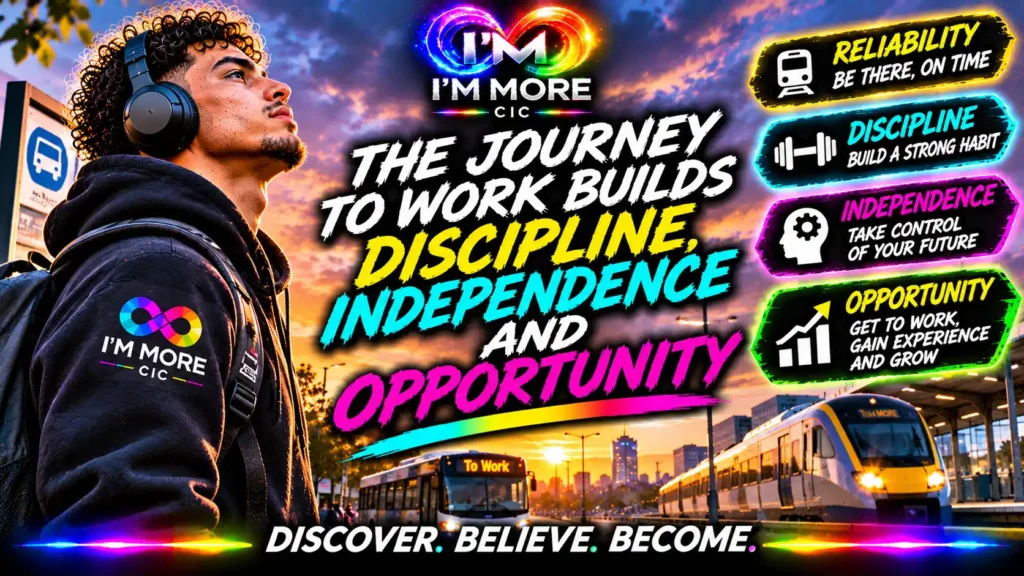
Your first opportunity does not define your future
Starting your first job can bring a strange mixture of excitement and uncertainty. You might be pleased to earn your own money but still wonder whether the role is right for you. You might look at friends who seem further ahead and question whether you are making enough progress. These feelings are understandable, particularly when you are still discovering what you enjoy and where your strengths lie.
The important thing to recognise is that your first job does not have to be your final career. A role in retail, hospitality, administration, construction or customer service can be a starting point. It can teach you how organisations operate, what employers expect and how you respond when real responsibilities depend on you. Even if you eventually choose a completely different industry, much of that experience can travel with you.
Look beyond the job title
It is easy to judge a role by its title, pay or how impressive it sounds when you tell somebody about it. But a job description never captures everything you might learn. Helping customers can develop patience and communication. Working on a busy shift can improve organisation and teamwork. Handling stock or records can teach accuracy and attention to detail.
These are transferable skills: abilities you can use in different roles and sectors. The National Careers Service explains how communication, problem-solving, organisation and adaptability matter across many jobs. Instead of asking only, “Is this my dream job?”, ask, “What can I learn here that will make me more capable in the future?”
That question changes how you approach ordinary tasks. Arriving prepared, following instructions carefully and checking your work are not glamorous achievements, but they establish professional habits. Those habits can make a difference when a new responsibility or opportunity appears.
Confidence comes from evidence, not pretending
When you are new, you may feel pressure to look confident even when you are unsure what to do. But genuine confidence develops through evidence: completing a task correctly, improving after feedback and realising that something difficult has become manageable.
You do not need to pretend you know everything. Ask a clear question when instructions are confusing. Write down processes that you will need again. If you make a mistake, acknowledge it, correct what you can and find out how to avoid repeating it. These behaviours show maturity rather than weakness.
Try keeping a short record of your progress. At the end of each week, write down one task you handled independently, one skill you improved and one area you still need to practise. Over several months, this becomes a useful reminder of how much you have developed, especially on days when progress feels slow.
Learn how to work with different people
Most workplaces bring together people with different personalities, backgrounds and ways of communicating. You will not always agree with everybody, and you will not always receive feedback in the style you prefer. Learning to respond professionally is part of your development.
Listen before reacting. If somebody corrects your work, separate the useful information from the uncomfortable feeling of being corrected. Ask what a successful result would look like. When you disagree, explain your concern calmly and focus on the issue rather than attacking the person.
Professionalism does not mean accepting disrespect, unsafe conditions or unreasonable treatment. It means understanding when to resolve a small misunderstanding directly and when to seek appropriate support from a manager, HR representative or trusted adviser. Building this judgement is another skill that can help throughout your career.
Take ownership without expecting perfection
Taking ownership means being responsible for the work you have agreed to do. It involves managing your time, communicating about problems early and making an effort to improve. It does not mean working through every break, hiding difficulties or saying yes to every request.
If you are struggling to finish something, explain what you have completed, what is blocking you and what support would help. If your workload is unrealistic, ask which task should take priority. These conversations can prevent small issues from becoming bigger ones.
Progress is rarely a straight line. Some weeks you will feel capable and motivated; other weeks you may feel tired or uncertain. A useful routine can help you keep moving without relying on motivation alone. Prepare for your shift, keep a realistic to-do list and allow time to recover outside work. Sustainable effort matters more than occasional bursts of intensity.
Use experience to discover your direction
Early employment can help you discover what suits you and what does not. You may enjoy solving problems but dislike repetitive tasks. You may discover that you work well with people, or that you prefer detailed independent work. Neither discovery is wasted time. Both can help you make more informed career decisions.
Look at roles that interest you and compare their requirements with the skills you already have. The National Careers Service offers guidance on identifying strengths and developing new skills. You might choose an online course, a college qualification, supervised training or an apprenticeship. GOV.UK provides an official service for exploring apprenticeship opportunities in England.
You do not need to rush into the next opportunity simply because somebody else is progressing differently. Make a plan based on your interests, circumstances and realistic options. If your current role offers training or extra responsibility, discuss it with your manager. If it does not, you can still use the experience to strengthen future applications.
Turn everyday responsibilities into CV evidence
A strong CV does more than list where you worked. It explains what you contributed and what you learned. Instead of writing only “worked in a shop”, you could describe helping customers, operating a till accurately, supporting colleagues during busy periods or following stock procedures.
Keep your examples honest and specific. Think about the task, the action you took and the result. You do not need impressive numbers if you cannot verify them. A clear example of solving a customer problem or learning a new system can show an employer how you approach responsibility.
The same approach works in interviews. When asked about teamwork, reliability or dealing with pressure, use a real experience and explain what you learned. Even a short placement or part-time role can provide meaningful examples if you pay attention to your development.
A seven-day challenge to build your future
Day one: Write down three skills you already use at work or in everyday life. Include at least one that you could use in another industry.
Day two: Identify one task you want to perform better. Ask a colleague or manager what good performance looks like.
Day three: Practise that task deliberately. Notice what improved and what still feels difficult.
Day four: Read a job description for a role that interests you. Highlight the skills you already have and the ones you need to develop.
Day five: Update one section of your CV with a specific example from your experience.
Day six: Research a realistic learning option, such as a course, apprenticeship or workplace training opportunity. Check the requirements before making plans.
Day seven: Review the week. Choose one achievable action for the next month and decide when you will complete it.
This challenge is not about transforming your career in seven days. It is about proving that you can make decisions, follow through and build momentum through manageable steps.
Your future is built through what you do next
You may not be in your ideal job today. You may still be learning how to manage your time, communicate professionally or decide which direction to take. That does not mean you are falling behind.
What matters is whether you are using the opportunities available to develop useful skills and better judgement. Take your responsibilities seriously, ask for guidance when you need it and recognise the progress you make. Stay open to new paths, but do not overlook the value of what you are learning now.
At IM MORE, the message is simple: discover what you can do, believe that you can develop and become more capable through action. Your first job is not the whole story. It is one chapter that can help you write the next one.













