

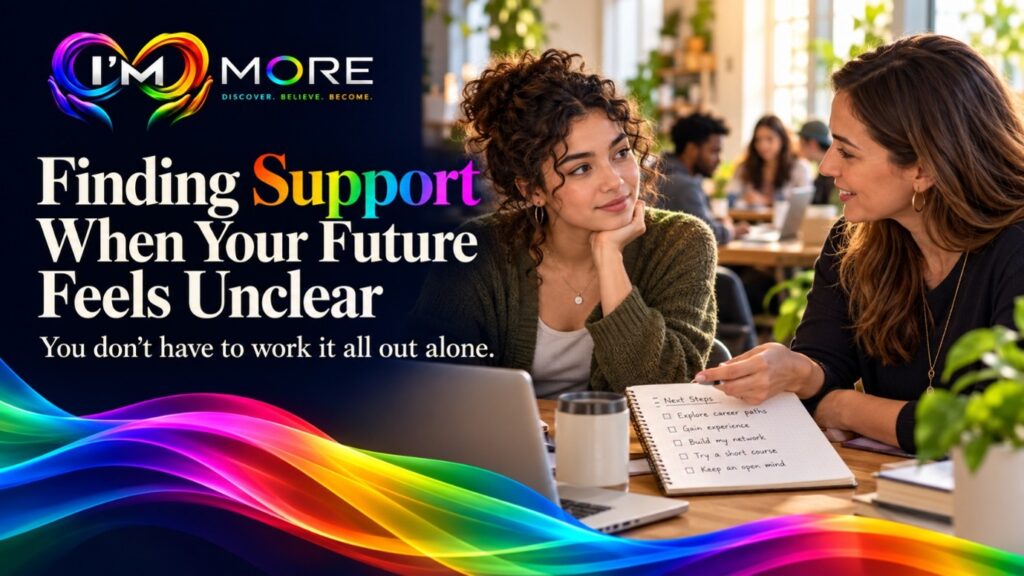
Finding support when your future feels unclear can make a real difference, especially when you’ve left education without knowing what direction to take. Having someone to guide you through your options can help you build confidence and identify practical next steps.
When I left college with hardly any qualifications, I didn’t know what my future was going to look like. I knew I wanted to do something with my life, but I couldn’t see a clear way forward. There were questions about work, money and what I was capable of, and I didn’t know where to start looking for answers.
One of the hardest parts was feeling as though I should already know what to do. I worried about failing myself and my family. I wanted to make them proud, but wanting a future and knowing how to build one felt like two very different things.
At the time, signing on felt like one of the only options I knew about. I needed income and support, and there was nothing wrong with that. What I wished I had understood was how to find help exploring what could come next. I needed someone to explain the possibilities without expecting me to arrive with a complete plan.
Looking back, I can see that I needed space to say, “I don’t know what I want to do yet.” That can be difficult to admit when you already feel behind. You might worry that someone will think you aren’t trying, even when you spend a lot of time thinking about your future.
For me, not knowing didn’t mean I didn’t care. I cared so much that the uncertainty frightened me. I wanted an opportunity to show what I was made of, but I struggled to explain what I could offer. It was difficult to ask someone else to believe in me when I wasn’t sure how to believe in myself.
I have also spoken about how losing a job affected my trust. My walls were up, and I didn’t want to let anyone down. Experiences like that can make accepting encouragement complicated. You can want support while still feeling nervous about opening up or getting your hopes up again.
That is why the way someone offers help matters to me. I want to feel listened to before being told what I should do. A useful conversation would give me time to explain what has happened, what worries me and what I might like to try. I wouldn’t need someone to promise that everything would work out. I would need them to help me understand a next step I could realistically take.
Sometimes, that first step could be quite small. It could mean asking what a course involves, finding out about a job or talking through an interest. I would have found it easier to focus on one question than to feel as though I had to decide the rest of my life in a single conversation.
For anyone facing that uncertainty now, the National Careers Service’s guide to options after turning 18 explains routes including work, further study, apprenticeships and volunteering. Reading about the possibilities could give you something to discuss with someone who can help you explore them.
Through my work at I’M MORE, I now have opportunities to write, create content and contribute ideas for young people. These tasks are giving me things to practise and experiences to learn from. They also help me think about the support I would have wanted when I first left college.
Writing about my own experience gives me a way to express things I once found difficult to explain. I can describe how it felt to be unsure of my abilities and worried about what people might think. I hope that honesty can help another young person find words for their own experience, even if their circumstances are different from mine.
I am still learning how to ask for help myself. Wanting to do well can sometimes make it difficult to admit that I need something explained. But a question can give me a way forward. “Could you show me an example?” or “Who could I speak to about this?” are things I can practise saying.
I’M MORE’s article on asking for help at work is a related read for someone thinking about how to speak up when they need guidance.
I also want to become clearer about what I am asking for. Sometimes I might need someone to listen. At another time, I might need help understanding an application, finding information or deciding which task to do first. Being able to name that need could make a conversation more useful for both of us.
For someone looking for careers guidance in England, the National Careers Service’s help and support page explains where to access advice, including support for adults aged 18 and over. You can use it to find out how to contact an adviser rather than trying to answer every question on your own.
There are practical questions I would want to ask before joining a programme or attending a session. Who is it for? What would happen when I arrived? Would I need to bring anything? Could I speak to someone beforehand? Knowing those details could make an unfamiliar opportunity feel more approachable.
This is something I want to keep in mind when helping create content for I’M MORE. Saying that support exists is a starting point, but people also need to understand how to access it and what to expect. I would like our articles and social media posts to make that first enquiry feel manageable.
Through Discover, Believe and Become, I want to help share the message that young people can begin exploring their future while they are still unsure of themselves. There should be room to ask questions, recognise strengths and practise something new without feeling embarrassed about where they are starting.
Readers looking for local starting points can explore I’M MORE’s employment and training resources in Essex. It is worth checking the requirements of each opportunity and asking the provider anything you need to know before taking part.
If I could speak to myself when I first left college, I would tell her that she didn’t need a finished plan before asking for help. I would encourage her to explain how uncertain she felt and ask someone to work through the options with her. I would remind her that accepting support didn’t take away her ability to make her own decisions. My future is still something I am working towards. There are skills I want to develop and things I have yet to discover about myself. But today, I have experiences I can write about, ideas I can contribute and questions I can ask. I once wished someone would give me a chance to show what I could do. Now, I want to keep making use of the opportunities in front of me—and help other young people understand where they might find support for their own next step.













