

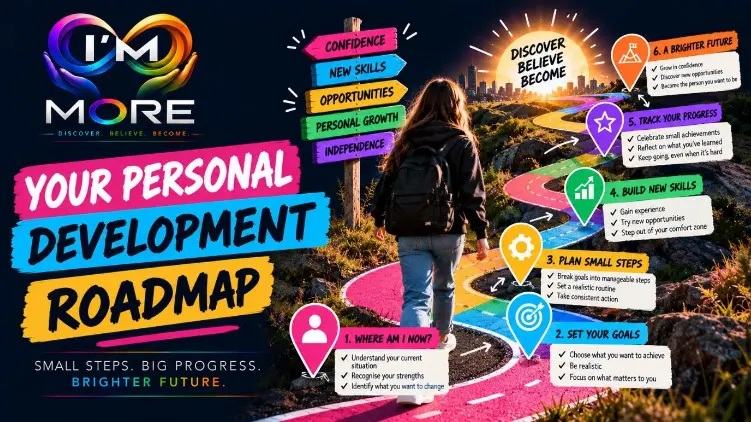
Feeling Lost About Where to Start?
Have you ever wanted to make changes in your life but had no idea where to begin?
You might want to build confidence, find employment, learn new skills, or become more independent, but sometimes thinking about everything you want to achieve can feel overwhelming.
You might see other people setting goals, making plans, and moving forward while you’re still trying to figure out what your next step should be.
This can leave you feeling frustrated, especially when you don’t know what direction you want your future to take.
But you don’t need to have your whole life figured out to start making progress.
Sometimes all you need is a simple plan that helps you understand where you are, what you want to achieve, and how you can begin moving forward.
That’s where creating a personal development roadmap can help.
What Is a Personal Development Plan?
A personal development plan is a way of identifying your goals and breaking them down into smaller, achievable steps.
Think of it as your own roadmap.
When you’re travelling somewhere new, you might not know every turn you’ll need to take, but having a direction can help you understand where to start.
A personal development plan works in a similar way.
It can help you:
- Recognise your strengths and abilities.
- Understand what you want to improve.
- Set realistic and achievable goals.
- Build confidence in your decisions.
- Develop new skills and gain experience.
- Track your progress and recognise achievements.
Your plan doesn’t need to be complicated or perfect.
It just needs to be something that works for you.
Step 1: Understand Where You Are Right Now
Before you start planning your future, take some time to understand your current situation.
Ask yourself what you’re happy with, what you’re struggling with, and what you’d like to change.
For example, you might have recently left school or college and feel unsure about your next steps.
You might be unemployed, lacking confidence, or worried that you don’t have enough qualifications.
Instead of focusing only on what you haven’t achieved, try recognising what you’ve already learned from your experiences. You can also use the National Careers Service skills assessment to explore your interests and potential career options.
Ask yourself:
- What am I good at?
- What do I enjoy doing?
- What challenges am I currently facing?
- What skills would I like to develop?
- What would I like to change about my situation?
Understanding where you are today is the first step towards deciding where you want to go.
Step 2: Decide What You Want to Achieve
Once you understand your starting point, think about what you want to work towards.
You don’t need to set yourself huge goals straight away.
Start with something that feels meaningful to you.
For example, your goal might be to become more confident speaking to people, improve your communication skills, find work experience, or explore possible careers. You can find further career guidance through the National Careers Service.
Try choosing one or two goals rather than attempting to change everything at once.
You might write:
“My goal is to become more confident when speaking to new people.”
Or:
“I want to gain experience that will help me prepare for employment.”
These goals give you something to focus on without putting unnecessary pressure on yourself.
Step 3: Break Your Goals Into Smaller Steps
One of the biggest reasons people struggle to follow a personal development plan is because their goals feel too big.
You might decide that you want to become more confident, but without knowing how to achieve it, you could quickly lose motivation.
Instead, break your goal into smaller actions.
For example, if your goal is to improve your confidence, your steps could be:
- Start one conversation with someone new.
- Ask a question during a group activity.
- Practise introducing yourself.
- Try an activity outside your comfort zone.
- Reflect on what you’ve learned from each experience.
Each action gives you something manageable to work towards.
Small steps might not seem important at first, but they can help you build confidence and create lasting progress.
Step 4: Create a Routine You Can Actually Follow
Making a plan is one thing, but sticking to it can sometimes be the hardest part.
It’s easy to feel motivated when you first set a goal, but life can become busy, stressful, or unpredictable.
That’s why it’s important to create a routine that feels realistic.
Instead of expecting yourself to work on your goals every day, start with a manageable commitment.
For example:
- Spend 15 minutes researching a career that interests you.
- Practise a new skill twice a week.
- Apply for one suitable opportunity each week.
- Write down one achievement every Friday.
- Set aside time once a month to review your goals.
Choose actions that fit around your circumstances.
You can always increase your commitments when you feel ready.
The aim isn’t to create a perfect routine. It’s to build habits that help you keep moving forward. You can also explore GOV.UK apprenticeship opportunities if gaining practical skills and employment experience is part of your development plan.
Step 5: Recognise Your Progress Along the Way
Sometimes we become so focused on reaching our goals that we forget to recognise the progress we’re making.
You might feel like you haven’t achieved much because you haven’t reached your final destination.
But progress isn’t always measured by big achievements.
It can be recognising that you’re more confident than you were a few months ago, that you’ve learned something new, or that you’ve tried an opportunity you previously avoided.
Keep a simple record of your progress.
At the end of each week, ask yourself:
- What have I achieved?
- What have I learned?
- What am I proud of?
- What was difficult?
- What could I do differently next week?
Looking back at your answers can help you recognise how far you’ve come.
Step 6: Don’t Give Up When Things Don’t Go to Plan
One of the most important things to remember is that your personal development plan doesn’t have to stay the same forever.
Sometimes your circumstances change.
You might discover that a career you were interested in isn’t right for you, or you might experience setbacks that make your original goals more difficult.
That doesn’t mean you’ve failed.
It means you may need to adjust your plan.
For example, if your goal was to find employment within a month but you haven’t been successful, you could focus on improving your CV, gaining experience, or exploring training opportunities. You can also explore I’M MORE’s on-demand training for additional learning and personal development opportunities.
Being flexible gives you the chance to learn from your experiences rather than feeling defeated when things don’t work out.
Your roadmap can change direction without your progress being wasted.
Step 7: Believe in Your Ability to Grow
Creating a personal development plan isn’t just about setting goals.
It’s also about learning to believe in yourself.
When you’ve experienced rejection, uncertainty, or a lack of confidence, it can be difficult to imagine yourself achieving something meaningful.
But your current circumstances don’t determine everything you’re capable of becoming.
You can develop new skills, discover interests, build confidence, and explore opportunities you might never have considered before.
At I’m More, the message of Discover. Believe. Become. encourages people to recognise their potential and take steps towards a more positive future.
Your personal development roadmap can be one way of putting that message into action. You can also discover more personal development stories and guidance through The Voice.
Your Future Starts With One Small Step
If you’re feeling lost or unsure about your future, remember that you don’t need to achieve everything immediately.
Creating a personal development plan is about giving yourself a direction, not putting pressure on yourself to become successful overnight.
Start by understanding where you are, choosing one meaningful goal, and deciding on one small action you can take this week.
Give yourself time to learn, make mistakes, and change direction when necessary.
You don’t need to see the whole journey to start moving forward. You just need to take the first step.
Your roadmap is personal to you.
Your goals, your progress, and your future don’t have to look like anyone else’s.
Discover your strengths. Believe in your abilities. Become the person you want to be.













