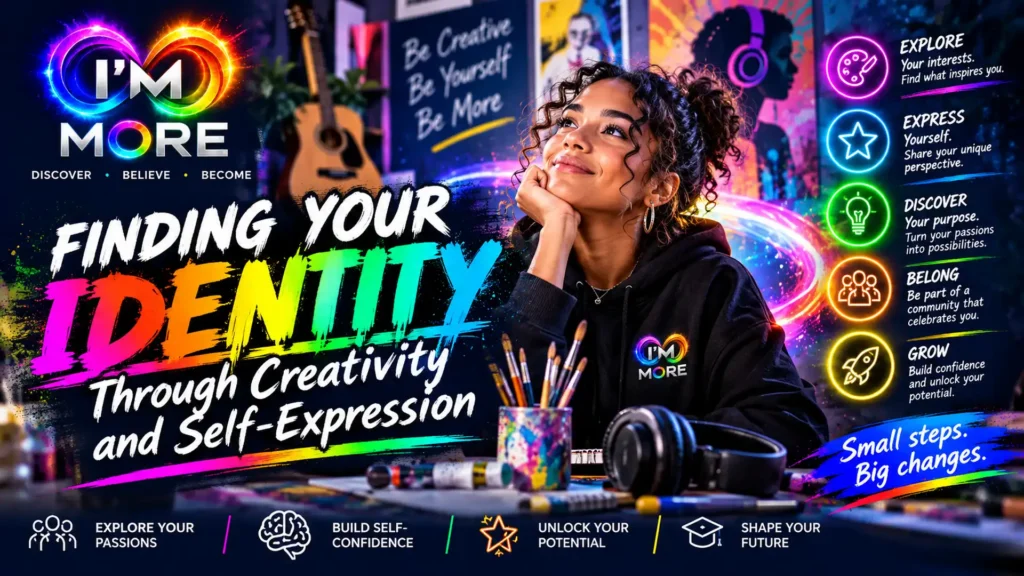
You Are More Than the Labels Around You
Working out who you are can be one of the most meaningful parts of growing up. Between the ages of 18 and 24, life can bring new responsibilities, changing friendships, education choices, work opportunities and questions about the future. It can sometimes feel as though you are expected to have everything figured out. You may compare yourself with people who seem confident about their direction, or feel pressure to fit into an identity that other people have already decided for you.
But your identity is not a finished description that somebody else gets to write. It is shaped by your experiences, values, interests, relationships, ambitions and the choices you make as you grow. You are allowed to discover new sides of yourself, change your mind and develop interests that you did not know you had. You do not need to fit into one category, and you do not have to prove your worth by being the same as somebody else.
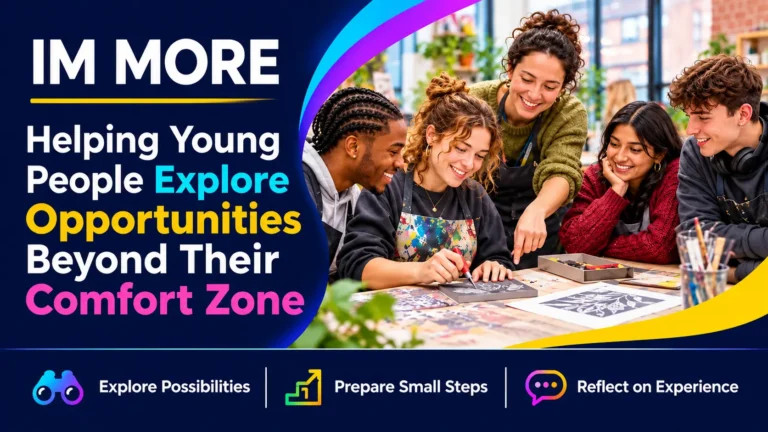
Creativity and self-expression can help you explore that process. Whether you write, make music, draw, dance, design, take photographs, create videos, cook, build things or find original ways to solve everyday problems, creative activity gives you opportunities to experiment with ideas and communicate what matters to you. It can help you understand yourself more clearly, while reminding you that your voice and perspective have value.
Creativity Is Not Limited to Being an Artist
When people hear the word creativity, they sometimes think only of painting, acting, music or other artistic careers. Those activities are important, but creativity is much broader. It can be found in the way you approach a challenge, organise an event, develop a new idea, solve a practical problem or find a different way to communicate with someone. Creativity is not reserved for people who already consider themselves talented. It is something you can practise and develop.
You might express creativity through a playlist that tells a story, a personal style that reflects your personality, a short film, a social media project, a piece of writing, a new recipe or a solution to a problem at work. You might enjoy working with technology, experimenting with sound, making things by hand or bringing people together around a shared idea. The activity itself matters less than the opportunity it gives you to explore, make decisions and express something that feels personal.
Creative activities can also reveal strengths that you may not immediately associate with creativity. Planning a project can develop organisation. Editing a video can strengthen attention to detail. Learning an instrument can encourage patience and practice. Sharing a project with others can build communication and confidence. These abilities can be useful in many areas of life, including education, employment and relationships.
Self-Expression Helps You Understand What Matters to You
Self-expression is the way you communicate your thoughts, feelings, interests, beliefs and personality. It can happen through words, appearance, movement, music, art, conversation or the decisions you make about how to spend your time. It does not mean you must share everything publicly. You can express yourself privately through a journal, a personal project or a creative routine that belongs only to you.
Making space for self-expression can help you notice what matters to you. You may discover that certain subjects make you curious, that you enjoy telling stories, or that you feel most engaged when you are helping other people. You may find that you prefer working independently, or that your best ideas emerge when you collaborate with a team. These observations can help you understand your values and the environments in which you feel comfortable.
It is also important to remember that self-expression does not have to look impressive. A first attempt at a song, drawing, poem or design does not need to be perfect. The purpose is not to produce something that receives approval from everyone who sees it. The purpose is to explore an idea and learn something about yourself in the process. Your creative journey is allowed to be personal, experimental and unfinished.
Confidence Grows When You Give Yourself Permission to Try
Confidence is not always something that appears before you take action. Sometimes it develops because you decide to try something even when you are uncertain. You might feel nervous about sharing your writing, showing someone a design, performing in front of people or joining a creative group. That feeling does not automatically mean you should stop. It may simply mean you are doing something unfamiliar.
Start with manageable steps. Create something for yourself before deciding whether to share it. Ask a trusted person for constructive feedback. Join a beginner-friendly group or attend a workshop where people are learning together. Set a small goal, such as practising for twenty minutes, completing one page, recording a short idea or finishing a simple project. Each step gives you experience, and experience can make the next step feel more achievable.
Try not to measure your progress only against people who have been practising for years. Everyone starts somewhere, and people develop at different speeds. Instead of asking whether your work is as good as somebody else’s, ask what you have learned, what you enjoyed and what you would like to improve. Confidence built through personal progress is more sustainable than confidence that depends entirely on outside approval.
Your Creative Interests Can Open Doors to Opportunities
Exploring creativity can also help you discover possible routes into education, training and employment. An interest in music might connect with performance, production, sound engineering, event management, marketing, teaching or digital content. Photography can lead towards visual communication, media, editing, commercial work or creative business. An interest in fashion might connect with design, retail, styling, textiles, marketing or entrepreneurship. There are often more roles connected to an interest than the first job title that comes to mind.
The National Careers Service guide to creative and design careers introduces a range of roles across areas such as music, media, design, television and radio. Its career profiles can help you explore what different jobs involve, including typical tasks, entry routes and progression. Researching these options can help you turn curiosity into practical next steps.
You do not have to turn every interest into a job. Some creative activities may remain hobbies, and that can be valuable in its own right. However, if you discover an area you want to pursue professionally, you can begin building evidence of your skills. This might include a portfolio, recordings, designs, a blog, a short film, a project page or examples of work you have completed. Small projects can help you practise and give you something concrete to discuss when applying for opportunities.
Express Yourself While Respecting Other People’s Differences
Finding your identity is not about deciding that your way of seeing the world is the only right way. It is about becoming more comfortable with your own perspective while recognising that other people are also discovering theirs. Creative spaces can bring together people with different backgrounds, tastes, experiences and ways of communicating. Listening to those perspectives can introduce you to new ideas and help you develop empathy.
You may not always agree with feedback or understand another person’s creative choices. You can learn to consider different viewpoints without losing your own voice. Constructive feedback can help you improve, but not every opinion needs to become a judgement about your value. It is useful to distinguish between feedback that helps you develop a skill and comments that simply try to make you feel smaller.
Healthy self-expression also includes knowing your boundaries. You decide what you want to share, where you want to share it and who you trust with personal parts of your life. Online platforms can be useful places to display creative work and connect with others, but you do not need to make every part of your identity public. Your worth is not measured by likes, views or how quickly other people respond.
Turn Creative Exploration Into Personal Growth
Creativity can become a practical way to build habits that support your wider development. Choose a project that interests you and break it into small stages. Set aside time to work on it, keep track of what you learn and allow yourself to make mistakes. If you are working with other people, practise communicating your ideas, listening carefully and sharing responsibility. If you are working alone, build routines that help you stay organised and motivated.
You may also discover that creativity helps you respond differently to challenges. When a plan does not work, you can experiment with another approach. When you receive feedback, you can decide what is useful and what you want to do differently. When you reach the end of a project, you can reflect on what went well and what you would change next time. These habits can support problem-solving, adaptability and resilience in many settings.
For young people who are unsure about their next step, a creative project can also provide a starting point for conversations with tutors, mentors, careers advisers or employers. You can explain what you made, why you chose it, what skills you used and what you learned. The National Careers Service careers advice offers guidance on exploring options, developing skills and planning your next move. If you need help connecting an interest to a course or job, speaking with a careers adviser can help you identify realistic routes.
A Five-Day IM MORE Creativity and Self-Expression Challenge
This five-day challenge is designed to help you explore your interests without putting pressure on yourself to create something perfect. Adapt each activity to your circumstances, available time and resources. You do not need expensive equipment or previous experience to begin.
Day 1 — Explore what interests you. Write down five things you enjoy, topics you are curious about or activities you would like to try. They can be creative, practical, social or completely different from one another. Circle the one you feel most interested in exploring.
Day 2 — Make something small. Spend a little time creating something connected to that interest. It could be a drawing, a short piece of writing, a playlist, a photograph, a design, a beat, a short video or an idea for a project. Focus on completing it rather than making it perfect.
Day 3 — Reflect on what it says about you. Write down what you enjoyed, what challenged you and which skills you used. Did you enjoy planning, experimenting, problem-solving, expressing an emotion or learning a new technique? Note anything that surprised you.
Day 4 — Share or connect, if you feel comfortable. Show your work to someone you trust, join a supportive group or explore a community connected to your interest. Ask for constructive feedback, and take time to learn from someone else’s perspective. You can also choose to keep your work private.
Day 5 — Choose one next step. Decide whether you want to continue the project, try a related activity, research a course, build a portfolio or explore a career connected to your interest. Write down one small action you can take this week.
Final Thought: Your Identity Is Yours to Discover
You do not need to have one fixed identity or a complete plan for your future. You are allowed to grow, experiment, change direction and discover new parts of yourself. Creativity gives you a way to explore your ideas, recognise your strengths and express what makes you individual. Self-expression can help you become more comfortable with your voice and more confident in the choices you make.
Whether your creativity leads to a career, strengthens a hobby, builds new friendships or simply gives you a positive way to spend your time, it has value. Do not dismiss an interest because you are a beginner, because it is different from what other people enjoy or because you cannot yet see where it might lead. Give yourself the chance to explore it.
At IM MORE, we believe your potential is not limited by other people’s expectations or by the labels attached to your past. Discover what inspires you. Believe that your ideas and perspective matter. Become more confident through the experiences you choose to pursue. Your identity is not something you have to copy from somebody else — it is something you can continue to discover and shape for yourself.
IM MORE — Discover. Believe. Become.