For a long time, I didn’t think a CV meant much at all.
That probably sounds strange considering how much importance is placed on having the “perfect” one. Throughout my time looking for work, I lost count of how many conversations I had with employment advisers and work coaches about updating my CV. Every time another application went unanswered or another interview never came, the first suggestion was almost always the same: “Let’s update your CV.”
So we would.
I’d rewrite sections, change the layout, add new wording, create different versions for different jobs and keep sending them off, hoping this one would somehow be different. But after a while, it became difficult not to question how much difference those changes were really making when I was still hearing nothing back.
Eventually, my perspective shifted. I stopped believing my future was hidden somewhere inside a perfectly worded document. It wasn’t that I thought CVs were useless—they absolutely have a purpose—but after spending so long trying to perfect mine without ever getting the opportunity to show who I actually was, I started wondering whether employers ever got to meet the person behind the paper.
That was before I started working alongside Bradley.
That perspective changed even more during my first experience being part of an interview. It wasn’t what I expected. In fact, I had no idea it was even going to happen.
Bradley and I were on a phone call with an applicant, and completely out of the blue he said, “Alright, I’m going to pass the phone over to Macey to tell you a little more.”
My mind immediately started racing. What do I say? How do I say it? What if I say the wrong thing? I’d gone from quietly listening to suddenly being part of someone’s interview without any warning. Before I had time to overthink it, the phone was in my hand.
As soon as I held it to my ear, the applicant’s first words were, “I didn’t know this was going to happen.”
I couldn’t help but smile.
Neither did I.
In that moment, the nerves I was feeling became a little easier to manage because I realised we were both experiencing something unexpected together. I was still tense, of course, but hearing that immediately reminded me what interviews actually feel like from the other side. It’s easy to forget that everyone involved is human. The person asking the questions can be just as nervous as the person answering them.
That first interview was only the beginning of changing how I viewed recruitment.
Over the following weeks, Bradley would send me the CVs of applicants before we spoke about them together. We’d look over what was written on the page, but our conversations never stayed there for long. Instead, we’d talk about the phone calls he’d had with them, the messages they’d exchanged and, more importantly, the impression each person had left behind.
One conversation has always stayed with me. After speaking to an applicant, Bradley asked them to spend a little time looking through the company websites and then come back with their thoughts. The reply didn’t come half an hour later. It didn’t come that evening. It arrived around three days later saying they were ready to talk.
At first, I didn’t understand why that mattered so much.
Then Bradley explained that he wasn’t testing what they knew about the business. He was looking for something much harder to write on a CV: drive.
Looking back, I realised I’d done the exact opposite. After speaking to Bradley for the first time, I remember sitting at home debating whether I should call him back that day or wait until the following week. My parents encouraged me to pick up the phone, even though I was nervous. So I did.
That one phone call changed my life.
It’s funny how, for so long, I believed employers were looking for the perfect CV. Now I’ve seen the other side, I realise they’re often looking for something much harder to describe on paper.
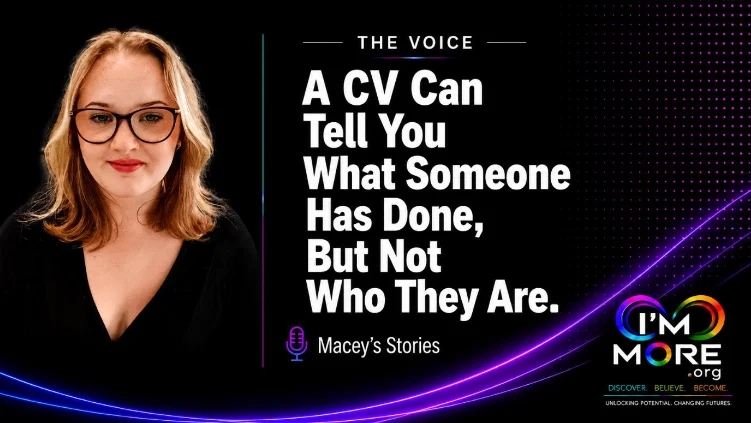
A CV can tell you what someone has done.
But it can never tell you who they are or what they’re capable of becoming if somebody is willing to give them the opportunity to prove it.
I’m still learning, still growing, and still proving that where you start doesn’t decide where you’ll finish.
— Macey Hutchins