

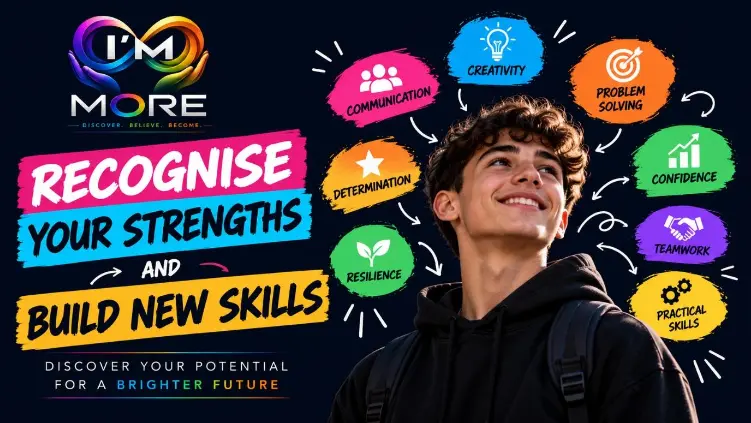
You Have More Strengths Than You Think
Have you ever felt like you’re not good at anything or struggled to recognise what you’re capable of?
Sometimes we spend so much time focusing on what we can’t do that we forget about the things we’re already good at. You might look at other people and see their achievements, qualifications, or confidence and begin questioning your own abilities.
But the truth is, you probably have more strengths and skills than you realise.
Not every strength comes from school, college, or employment. Some of the most valuable skills are developed through everyday experiences, overcoming challenges, helping others, and learning from mistakes.
Recognising your strengths is one of the first steps towards building confidence and discovering your true potential.
Why Do We Struggle to Recognise Our Strengths?
One of the biggest reasons people struggle to recognise their strengths is because they compare themselves to others.
You might see someone who is confident speaking in front of people, achieving good grades, or succeeding in their career and feel like you have nothing to offer.
Sometimes past experiences can also affect how you see yourself.
If you’ve struggled with education, been rejected from a job, or received negative comments about your abilities, you might start believing you’re not capable of achieving something meaningful.
But your strengths aren’t measured by your qualifications or other people’s opinions.
Everyone has different abilities, experiences, and qualities that make them unique.
How to Discover Your Personal Strengths
Discovering your strengths starts with looking at yourself differently.
Instead of asking what you’re bad at, start thinking about what you do well.
Ask yourself:
What activities do I enjoy doing?
What do people usually ask me for help with?
What challenges have I overcome?
What makes me feel confident or proud?
What skills have I developed through everyday experiences?
What would I like to become better at?
You might discover that you’re a good listener, a creative thinker, someone who works well in a team, or a person who stays determined even when things become difficult.
These are all valuable qualities.
For example, helping someone solve a problem can demonstrate communication and problem-solving skills. Looking after responsibilities at home can develop organisation and time management.
Sometimes the skills we use every day are the ones we overlook the most. The National Careers Service can also help you discover your skills and career options.
Learning New Skills Doesn’t Have to Be Difficult
Once you’ve started recognising your strengths, the next step is thinking about how you can develop them.
Learning something new can feel frightening, especially when you’re worried about making mistakes or being judged.
But nobody becomes confident or experienced overnight.
You could begin by:
Trying something new: Explore activities or opportunities that interest you.
Volunteering: Gain experience while helping others.
Taking an online course: Develop knowledge in a subject you’d like to understand better.
Practising regularly: Spend a little time each week improving one skill.
Asking for feedback: Learn from people who can offer helpful advice.
Stepping outside your comfort zone: Challenge yourself to try things you might normally avoid.
You don’t have to learn everything at once. Small improvements can gradually turn into meaningful progress. You can explore apprenticeship opportunities through GOV.UK or find information about developing skills for a career in care through Skills for Care.
Don’t Let Fear Stop You From Growing
Sometimes the biggest thing holding us back isn’t a lack of ability. It’s the fear of trying.
You might worry that you’ll fail, embarrass yourself, or discover that you’re not good at something.
But making mistakes is part of learning.
Think about something you once found difficult but can now do confidently. At some point, you had to start as a beginner.
The same applies to developing new skills.
You won’t always get everything right, and that’s okay. What matters is being willing to learn, improve, and keep moving forward.
You don’t have to be good at something to begin. You have to begin to give yourself the chance to become good at it. The Discover. Believe. Become. programme from I’m More can also help you develop confidence and take practical steps towards your future.
Turn Your Strengths Into Opportunities
Recognising your strengths can help you make decisions about your future.
For example, if you enjoy helping people, you might explore opportunities in customer service, healthcare, or community work.
If you’re creative, you could develop skills in writing, photography, design, or content creation.
If you’re organised and enjoy solving problems, you might discover an interest in administration, planning, or business.
You don’t need to know exactly what career you want. Exploring your strengths can help you understand which opportunities might suit you.
Every experience gives you the chance to learn something about yourself. You can also explore stories and experiences through The Voice at I’m More.
Believe in What You Can Become
At I’m More, the message of Discover. Believe. Become. encourages people to recognise their abilities, develop confidence, and explore their potential.
Sometimes all it takes is someone encouraging you to see strengths you haven’t recognised in yourself.
But learning to believe in your own abilities is just as important.
Your past doesn’t determine everything you’re capable of achieving, and not having qualifications or experience doesn’t mean you can’t develop valuable skills.
You are allowed to learn at your own pace, make mistakes, and discover new interests along the way.
Your Strengths Are the Beginning of Your Journey
Recognising your strengths isn’t about being perfect or being better than someone else.
It’s about understanding what makes you unique and giving yourself the opportunity to grow.
You might not recognise all your abilities today, but that doesn’t mean they aren’t there.
Start by identifying one strength you already have and one skill you’d like to develop.
Then take one small step towards improving it.
Remember, your potential isn’t limited to what you can do today. It’s also about everything you have the opportunity to learn and become.
Discover your strengths. Believe in your abilities. Become the person you want to be.













